Addicted to Fitness Show Notes – Apple Watch Review & Childhood Obesity

Welcome back!

Nick and I have been making progress on our training, bit by bit. We kick off this week’s podcast episode with a recap on what we’ve been doing.

Nick has been finding his Title Boxing classes to be a built in workout, which has been good since time between work and parenting has been somewhat limited.

He also gets into what he’s doing in his diet – intermittent fasting (phase two – which includes a 10 hour eating window and 14 hour fast). He’s already lost five pounds, which he wasn’t expecting, thinking he didn’t have that much weight to loose.  The point was never to loose weight, but rather to attempt to eliminate precursors of detrimental health conditions like insulin resistance and cancer. You can read more about his previous blog post on intermittent fasting and its benefits here.

I meanwhile, have been focusing on childcare, which is a workout in itself, but have already dropped over 20 pounds off my pregnancy weight (mostly due to breastfeeding). My available time to workout is about 30 minutes, so whatever I choose to do (Peloton bike or yoga usually) must fit in that window.

IMG_5690

We’re big fans of our Peloton Cycle

My cardio is the area that I have seen the most need for improvement. My goal for training has not been to loose weight though, but rather just to continue to combat postpartum anxiety and depression.

Our first main topic of the episode is a review of the new Series 3 of the Apple Watch.

podcast pic 11-6

Now, if you’ve been listening for a while, you might recall my review of the Fitbit Charge 2 earlier this year (listen to that ATF episode here) in which I stated that it was a test on whether I would like a fitness tracker and heart rate monitor at all. I wasn’t ready at that time to invest in anything more.

Well, I decided recently that I was ready for a smart watch, as the actual watch functionality was something that I really missed. With the latest release of the Apple Watch, Series 3, I felt it was finally time to make the move.

So first, a quick introduction to what I got!

I purchased the Series 3 – 38MM Apple Watch with GPS and the gold aluminum case, along with the Pink Sand Sport Band.

apple & Apple

The specs include:

  • Gold aluminum case
  • Built-in GPS and GLONASS
  • Faster dual-core processor
  • W2 chip
  • Barometric altimeter
  • Capacity 8GB1
  • Heart rate sensor
  • Accelerometer and gyroscope
  • Water resistant 50 meters
  • Ion-X strengthened glass
  • Composite back
  • Wi-Fi (802.11b/g/n 2.4GHz)
  • Bluetooth 4.2
  • Up to 18 hours of battery life
  • watchOS 4
In terms of the look and comfort, the 38mm size is great for my wrist size, as is the band, which fits even my smaller wrists surprisingly well. Plus the band is made of high performance fluoroelastomer that will stand up to my heavier use. The ability to customize the look by switching out the bands is the icing on the cake!
One of the best parts of this watch, is the watch face/s. Not only do they actually show up when I look at my watch (the Fitbit was not as sensitive) but the multiple, customizable faces that you can switch between and manage on your iPhone via the Apple Watch app, are crystal clear and very convenient.
Another key strength of this device is the integration with the iPhone, which is truly amazing. Everything is customized and controlled/setup through the iPhone via an app. It even has some of the same functionality (flashlight, talk to text, Siri, reminders, sound controls, etc.) to the iPhone.
Some of my favorite apps/programs include:
  • Heart Rate Monitor is pretty accurate and can run ongoing or in the background, depending how you’re using it (will drain battery life if using it to track an activity).
  • Activity – Set goals and get reminders. All of which integrate into the Health App on your iPhone
  • Workout – Quickly select a workout for tracking purposes. All metrics integrate into the Health App on your iPhone
  • Weather – Pretty straight forward, but seeing it on your watch at a glance is remarkably helpful
  • Timer & Stop Watch – Again, straight forward, but handy for a variety of instances
  • Maps – Would probably be good when you’re walking around and need to find something. Just takes a little time to get the directions on your watch.
  • Messages – Not particularly health focused, but is a simplified version of the Messages app in your phone. The talk-to-type tech is surprisingly accurate and makes it all that much easier to respond to texts without having to get your phone.
Finally, the magnetic charger sits in my bathroom and is super easy to lay the watch on. The fact it’s the basic charging cube cord makes it easy to interchange with other cords in my house (which are everywhere since we have so many apple products!).
The popularity of the Apple Watch means it’s been appearing on the wrists of people of all ages, including teens and kids! The question of whether these younger age groups are truly using these gadgets for fitness is somewhat questionable given our next topic… childhood obesity rates.
Nick came across this article in Time magazine recently that cited a study in a medical periodical, about how the BMI (ratio of weight & height) indicates that childhood obesity has risen 10 times worldwide over the last 40 years. [Insert gasp here]
The study reported dramatic increases in childhood obesity in African and Asian countries especially, which have historically had low obesity rates. This was a surprise to us. Additionally, in several countries where childhood obesity rates were already high (including the U.S.), the rates have plateaued, however, the researchers believe it is more due to coincidence and not policy action.


This slideshow requires JavaScript.

A related article Nick recently saw from the Washington Post (link) stated non-alcohol-related fatty liver disease (cirrhosis of the liver) is the fastest growing reason for liver transplants among young adults in the U.S.. This disease can be caused by obesity, hypertension and diabetes (i.e. high intake of sugar and grains IMO). One researcher in the article stated that they had a patient develop this condition at age 13.

It should be noted that the number of liver transplants due to non-alcohol related cirrhosis is small, but what is alarming is the dramatic increase in its prevalence over the last 10 years.

All in all, it’s an alarming study, reinforcing how important food and health education is among our youth!

As we wrap up, we encourage you to please visit our sponsor hempcoffeeexchange.com and use the code ‘ATF’ to get 20% off at checkout!

Reach out to us on social media (FacebookInstagram or Twitter) or send us and email at elementaltampa@gmail.com.

Links to this week’s episode

iTunes: https://itunes.apple.com/us/podcast/apple-watch-review-a-childhood-obesity/id1121420986?i=1000394456914&mt=2

Soundcloud: https://soundcloud.com/nick-burch-702220833/apple-watch-review-a-childhood

Website: http://addictedtofitness.libsyn.com/apple-watch-review-a-childhood-obesity
What’s On The Menu is this Weekend’s Workout

I didn’t get my weekly “What’s on the Menu” post done for its normal Thursday post date, but I still wanted to share it with you. Read about my experience with intermittent fasting then enjoy another effective weekend workout.

I was first introduced to the idea of fasting during my formative years in Catholic elementary school. Every Friday during Lent (the 40 days leading up to Easter), all Catholics were encouraged to fast during the day and then finish the day with a “meatless” dinner. Thankfully the Bible didn’t consider seafood meat, which meant I enjoyed a lot of McDonald’s fish sandwiches and pizza for dinner during Lent.

I’ll admit that my dedication to daylight fasting during Lent was spotty at best and, as devoted to Catholicism as my parents were and still are, they didn’t send my brother and I to school without lunches.  I was extremely grateful to them at the time, but with what I know now, periodic fasting could have been extremely beneficial.

The origins of fasting date back to ancient Greece and it’s inclusion in numerous religious doctrine make it one of the oldest weight loss/control methods. Even though its been used for several millennia, the extent of fasting’s metabolic benefits are just starting to be discovered (source).

One of my go-to sources for the latest health research, Dr. Rhoda Patrick, has been promoting the benefits of intermittent fasting, which she refers to as time restricted eating, for some time now. The basic concept is that you have an eating window everyday that syncs up to your natural circadian rhythm. The research suggests that the most metabolic benefits occur with a eating window of no more than 12 hours and, unlike my Lenten fasts, occurs during the day (source).

Studies have shown that adherence to this way of eating may save you from a number of the leading causes of death. Several recent discoveries about the death-defying benefits of intermittent fasting include:

  • Every other day fasting found to reduce obesity and insulin resistance by changing gut bacteria (source)
  • An 11-hour eating window associated with a significant reduction in breast cancer risk & reduction in recurrence (source)
  • Frequent fasting has been shown to reduce the insulin-like grown factor 1 (IGF1) which has been show to proliferate the growth of cancer cells (source)

Screenshot 2017-11-04 at 8.16.10 AM

I’ve been partaking in time restricted eating for the past 3 weeks and I’ll admit it’s pretty tough for someone like me. I have a very active job and some days I leave the house before 7am and don’t return till 8pm. Thankfully I’ve been very good at packing a lunch full of nutritious and satiating foods that help me get enough fuel in during my eating window.

Even though I started my current intermittent fasting plan with no desire to lose weight, I’ve lost nearly 5 lbs in 3 weeks. I know that doesn’t sound like a lot but when you’re 5’11” and 160, losing 5 lbs without really trying is pretty significant. As great as the weight loss is, I’m more excited by the possibility that this way of eating can help me prolong my life.

Another way to prolong your life is with regular exercise, which is why you should try the weekend workout featured below. This workout includes several variations of one of the most beneficial exercise there is, the squat.

Squats are considered a compound exercise, which means they are multi-joint movements that require the use of various muscle groups. Try to knockout these various forms of the squat and make sure you let us know in the comment section below or on social media (FacebookInstagram or Twitter) how you feel the next day. Don’t forget to warmup and modify the workout to match your fitness level. ENJOY!

ETT 10-21 Weekend Workout (4).png

Addicted to Fitness Show Notes – Coping With A Miscarriage

We have a bit of a more serious topic today for the podcast episode, but one that both Nick and I wanted to share.

Before we get into the main topic, we check-in on our current training and diets. Nick has been training three times a week at Title Boxing Club in South Tampa where his current and past clients are starting to attend, including Spanish and Carmin from 102.5 The Bone.

He is also choosing to focus more on nutrition and diet. The latest challenge? Currently he’s doing a 14-hour daily fast, mostly during the night. His efforts have been the result of a ton of research he’s collected from individuals like Dr. Jason Fung and Dr. Rhonda Patrick which states that intermittent fasting can help you lose weight and allow your body to clean up damaged cells which may cause detrimental health conditions like cancer. Click here to watch a video from Dr. Rhonda Patrick explaining the benefits of intermittent fasting in more detail.

Meanwhile, while I have not been participating in the fasting, I have been more aware of my food and am working on looking at food more as fuel for my body versus just something to consume. I also got back on the Peloton bike this week, despite not having yet completed the recommended 6-week waiting period after Ella’s birth. Don’t worry, I’m taking it easy so that I can get some regular, low-impact activity into my routine. I performed a 20-minute session and I’m happy to report that it was a success!

Screen Shot 2017-10-28 at 6.17.44 PM

Now, we move on to the main point of our episode today. As October is Miscarriage & Infant Loss Awareness Month, it felt like the appropriate time to share an experience that we’ve kept to ourselves for over a year.

It may seem surprising, but miscarriages happen to 10%-20% of known pregnancies (depending on the study you read). You would definitely be surprised if every person who has experienced one came out and shared the info, but few actually do. There’s not a great deal of information about miscarriages out there beyond the info about them mostly being caused by an incompatibility issue with the chromosomes during development at some point during the first 20 weeks.

When you’re looking for how to cope with one though, there’s very little info. Furthermore, there is even less info about what a person or couple goes through.

I recently blogged about our experience with a miscarriage that we experienced last year on A Dash of Sparkle.

Daddy & Ella

In the podcast though, we discussed a bit more about how both Nick and I felt during and after the miscarriage.

As personal of an experience it is to go through, the lack of conversation about it has led to women/people going through this tragedy in silence in many instances. Only recently have more public figures (celebrities and such) come forth and admitted to having gone through one (or more).

I was lucky enough to follow some bloggers/vloggers who shared their experience and thoughts on the their personal situations, which provided me with information. It was still a very difficult time in our lives, however, no matter what we read.

Screenshot 2017-10-30 at 7.46.21 AM

We hope us sharing our story and feelings connect with those in need in a positive way.

Don’t forget to please support the sponsor of the ATF podcast, The Hemp & Coffee Exchange by visiting their site, hempcoffeeexchange.com, and get 20% off your purchase by using the code ATF at checkout.

We always encourage you to reach out to us via email (elementaltampa@gmail.com) or on social media (FacebookInstagram or Twitter). Whatever your health questions or comment may be, we’d love to hear it. Thanks for listening and stay healthy this week peeps!

Links to this week’s episode

iTunes: https://itunes.apple.com/us/podcast/addicted-to-fitness-podcast/id1121420986?mt=2#episodeGuid=82d09804b5168ddd1e91882bdb6cb393

Android: http://addictedtofitness.libsyn.com/leaky-gut-the-benefits-of-probiotics

Website: http://addictedtofitness.libsyn.com/coping-with-miscarriage

Weekend Workout – Push It, Push It Real Good

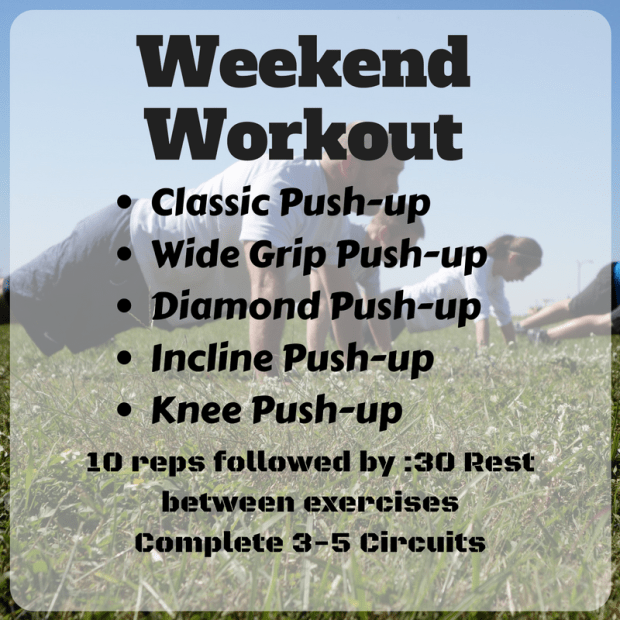
Compound exercises are multi-joint movements that require the use of various muscle groups. That means performing a workout filled with compound exercises will give you more “bang for your buck” which is why I decided to fill this weekend workout with one of the best compound exercises around: the push-up.

This bodyweight workout includes a variety of push-up variations that will strengthen numerous muscle groups in your body.  I recommend performing 10 reps of each push-up variation followed by at least 30 seconds of rest for three to five circuits. Don’t forget to warmup and modify the workout to match your fitness level.

Connect with us on social media and share pics/videos of you performing this or any weekend workout (FacebookInstagram or Twitter). ENJOY!

ETT 10-21 Weekend Workout (3).png

What’s On The Menu – How To Make A Sustainable Cup of Joe

Besides nutrition and exercise, coffee has to be the most popular subject matter on elementaltampa.com. I took a quick look and I’ve written 3 blog posts and recorded 3 Addicted to Fitness podcasts that discuss the benefits of my favorite beverage. This week’s menu spotlight will be yet another ode to one of my beloved coffee beverages.

If you listen to this week’s ATF podcast (episode link) you would have heard that we’ve been fortunate enough to partner with an awesome company called The Hemp & Coffee Exchange. THC_exchange produces a

Super coffee blend of intelligently sourced hemp seeds, hearts, and green coffee beans.

If that product description sounds familiar to our longtime followers, it’s because we interviewed the creators of The Hemp & Coffee Exchange earlier this year for an episode of ATF, which I encourage you all to go back and listen to (episode link). I learned from that interview that their hemp-coffee blend is not only delicious but offers more nutritional & environmental benefits than the coffee you can buy at the grocery store.

thcpodcast1

Jeremy & Brett, creators of The Hemp & Coffee Exchange

The health benefits of coffee have been mentioned numerous times on this blog, but I think they always deserve repeating. Several of the positive health benefits associated with coffee consumption include:

  • Two or more cups of coffee could prevent alcohol induced cirrhosis by up to 66% (source)
  • Studies have shown that drinking coffee can result in a significant reduction in prostate cancer (source)
  • Studies have shown that the caffeine in coffee can improve performance in endurance events (source) FUN FACT: caffeine was considered a performance enhancing drug by the Olympic drug testing agency until 2004
  • Studies have linked coffee consumption to the reduction in the development of both Alzheimer’s disease and dementia (source)

THC_exchange uses high quality coffee beans, which they roast themselves, to produce their product, but the health benefits of this “sustainable super coffee blend” don’t stop there. The incorporation of hemp provides numerous important water-soluble nutrients like omega 3 & 6 fatty acids (specifically gamma-linolenic acid), amino acids and several important vitamins and minerals (source). The use of hemp is also important to another tenet held by the creators of THC_exchange, sustainability.

During our interview, THC_exchange creators told us that they believed that hemp could revitalize the United States agricultural industry. Not only is it a phenomenal cover crop, but it also re-introduces nutrients to the soil, takes minimal water & resources to maintain and has numerous industrial uses (e.g. livestock feed, textiles, building materials, etc.). Unfortunately mass production of non-psychoactive hemp is currently illegal in the United States, but products like THC_exchange coffee demonstrate its benefits and importance.

Screenshot 2017-10-26 at 6.21.57 PM

All these nutritional & environmental benefits aren’t even the main reason why I love this hemp-coffee blend so much. I can say without hesitation that it is one of the most flavorful ground coffees I’ve ever had. You all know how much I love coffee. I post a coffee pic on social media almost every day!

If THC_exchange’s coffee tasted crappy, no amount of health or environmental benefits could make me drink it, let along recommend it to others. Both varieties of their hemp-coffee blends have unique flavor profiles and they even offer a no hemp, whole bean option for those who aren’t ready to add a little hemp to their morning coffee.

I encourage you to head to THC_exchange’s website (link) to learn more about their values and products. If this post has compelled you to try one of their hemp-coffee blends, please use the code “ATF” at checkout to get a 20% discount. Let me know what you think and please feel free to share a pic of your cup of THC_exchange coffee with us on social media (FacebookInstagram or Twitter).

Addicted To Fitness Show Notes – Leaky Gut & The Benefits of Probiotics

Welcome back! This week’s show notes are brought to you by Shannon…

Both Nick and I had training updates for the first time in a bit (I have been a bit lighter on the training as of late).

I am slowly getting back into adding some activity, but am holding off on real training since my doctor mandated I not do any strenuous exercise for at least six weeks after childbirth. So I’ve been settling for daily walks with our dog and the baby, as well as some “slow flow” yoga, both of which are still making me sweat.

I’ve been super excited to get back to a prior-to-childbirth workout routine, especially since I’m getting back to regular clothes (no more maternity clothes!).

Meanwhile, Nick has been spending more time at home with the baby, which means he’s doing more at-home workouts. He puts them on his Instagram Stories, so be sure to follow @ETTampa and check them out! He’s also been getting some training leading the classes at Title Boxing, since he has to demonstrate the whole workout versus simply coaching like he does for personal training. He now teaches three classes a week (at noon, Monday-Wednesday).

In addition to the training, Nick has also made the decision to clean up his diet by focusing on nutrition. Diet has been a challenge for both of us since childcare has really minimized the amount of time we have to prepare food.

Whether we have time or not, we’re always fascinated with nutrition. One topic we wanted to get more in-depth on was one we have mentioned previously – leaky gut.

So what is it? Leaky gut is simply defined as increased gastrointestinal permeability. It’s commonly a symptom of conditions like Celiac and Crohn’s disease.  Interestingly enough, though it’s a term that is used more often these days, many medical sites and professionals reporting on this “condition” also call out that it is not one that can be diagnosed accurately.

Even medical celebrities like Dr. Oz are somewhat skeptical of the cause/origin of leaky gut, mostly since it’s not yet been determined whether it is the cause of other conditions/illnesses, or simply a side effect/symptom of something more serious.

Some research states that inflammatory foods (e.g. refined sugar & carbs, fast food, etc) may damage the function of the small intestine and thereby allow undesirable substances such as bacteria, viruses, un-digested food particles, and waste products to leak into blood stream. Nick mentioned a podcast episode by past ATF guest, Vinnie Tortorich, which discussed a recent study on the damaging effects fast food specifically can have on an individual’s gut health.

IMG_8780

Symptoms often associated with leaky gut include: bloating, cramps, fatigue, food sensitivity, achy joints, rashes – which are also symptoms for many other conditions.

The book, Practical Paleo claims that grains and seeds are the primary inflammatory foods, calling them anti-nutrients. Since many of our feel-good hormones and antibodies ( e.g. serotonin) are produced in our gut, it’s critical to focus on gut health. The best course of treatment for leaky gut is eliminating inflammatory foods from your diet for 30, 60, 90 days or longer. Practical Paleo offered up details on how to repair leaky gut, summarized nicely in one page (see above).

One of the ways to repair, the book calls out, is by taking probiotics. And this leads us to our discussion on the power of probiotics.

One of the few supplements we both take on daily basis are probiotics daily. Probiotics are the good bacteria that help keep the bad bacteria in check and maintain gut health.

IMG_8781

Recently Nick saw a study by ATF favorite, Dr. Rhonda Patrick (find her on YouTube, Twitter and Instagram @foundmyfitness), who also just had a baby, about the effect probiotics have on breast milk. The study found that mothers who take probiotics during the time they’re breastfeeding produce milk that seems to improve gastrointestinal functional symptoms and decrease incidence of infantile colic and regurgitation in their infants.

So we looked further into what the best probiotic foods are, as supplements are not the only place to find this gut-health-helpers. Healthline.com highlights the “Top 11 Probiotic Foods,” which includes some of our favorites like pickles, kimchi, sauerkraut and yogurt. Check the full list here.

We finish our chat with a friendly reminder; don’t forget that antibiotics can kill beneficial probiotics in your gut in addition to the bad ones, so be sure you take a medicinal dose of probiotics after you finish your antibiotics to restore your supply.

Screenshot 2017-10-22 at 8.22.16 PM

That’s it for this week’s episode!

Don’t forget to like & follow the Addicted to Fitness podcast page on Facebook, give us a rating & review in iTunes and please take advantage of your 20% off discount on coffee from our new sponsors, The Hemp & Coffee Exchange, at hempcoffeeexchange.com.

Learn more about our sponsors in our previous ATF episode where we interview the founders and taste test this delicious coffee here.

Links to this week’s episode

iTunes: https://itunes.apple.com/us/podcast/leaky-gut-the-benefits-of-probiotics/id1121420986?i=1000393875009&mt=2

Soundcloud: https://soundcloud.com/nick-burch-702220833/leaky-gut-the-benefits-of

Website: http://addictedtofitness.libsyn.com/leaky-gut-the-benefits-of-probiotics

Weekend Workout – This Workout Focuses on Your Core Concern

Several potential benefits of core training according to Men’s Fitness include: improved sports performance, reduction in lower-back pain, better posture, development of stronger breathing muscles and a slimmer waistline (source). Plus, you’ll absorb more beneficial Vitamin D during those times showing off your core muscles at the beach, or supermarket. Wherever you prefer.

You’re gonna want a workout mat to perform the core exercises in this weekend workout. I recommend performing five 10 rep supersets of these exercises with at least 60 seconds of rest in between sets. Don’t forget to warmup and modify the workout to match your fitness level.

If you complete this or any weekend workout, please let us know in the comment section below OR you can send us a pic/video of you doing the workout on social media (FacebookInstagram or Twitter). ENJOY!

ETT 10-21 Weekend Workout.png

What’s on the Menu – How Fat Can Be Your Friend

When celebrity fitness trainer Vinnie Tortorich came on the Addicted to Fitness podcast (click here to listen to entire episode) last year, he made a statement that really resonated with me. He said

The worse thing about dietary fat is that it’s called FAT!

That one statement inspired me to look into the low-carb, high-fat (LCHF) lifestyle to determine if it suited me better than the not so low carb lifestyle I was participating in at the time. After subtracting certain items that contain refined carbs from my diet and adding more items that were high in healthy fats, I started feeling fuller, longer and was no longer hangry two hours after a meal.

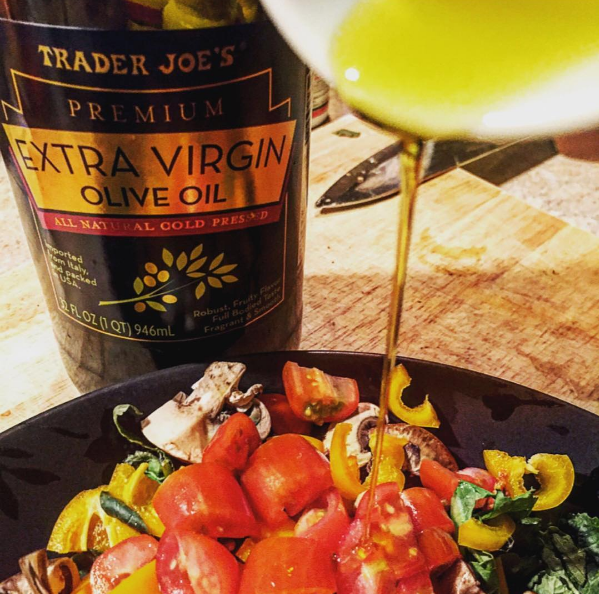
There is one particular “fatty” food item that has been a part of my diet well before my shift to LCHF. I’ve been hearing about its health benefits for well over a decade and its versatility has made it a staple in Shannon and I’s kitchen. It can be used as a cooking oil, salad dressing, finishing sauce and even a skin care product. The multi-talented food item I’m referring to is olive oil and it’s this week’s menu spotlight.

Olive oil is a broad category of oil made from pressed olives. I realize that isn’t “breaking news,” but I wanted to mention that because the different types of olive oils at the supermarket can be quite overwhelming. If you’re looking for the variety that provides the most health benefits, you’ll want to stick with extra virgin olive oil (EVOO). Any other variety may use solvents to extract the oil or partially consist of cheaper, inflammatory oils.

Even though EVOO, purchased from a reputable producer, doesn’t contain any protein or carbs, it’s still highly nutritious. One hundred grams, which is about 7 tablespoons, of EVOO contains 72% of our recommended daily allowance (RDA) for Vitamin E and 75% of our RDA for Vitamin K (source), both of which can contribute to preventing cardiovascular disease. The micronutrients contained in olive oil are impressive but it’s the type of fat it contains that really sets it apart from other cooking oils.

EVOO consists primarily of monounsaturated fat. This type of fat is more heat-resistant, which means it is less likely to oxidize when used in cooking applications. This is one aspect of EVOO that makes it superior to other cooking oils like canola or even flax-seed, which consist primarily of polyunsaturated fat. Less oxidation means less free radical production, which can cause inflammation that may researchers believe is responsible for chronic health conditions like atherosclerosis, Alzheimer’s and cancer. Oh, and EVOO contains a ton of anti-inflammatory phenols and polyphenols to further combat those previously mention conditions (source).

Screenshot 2017-10-19 at 10.04.32 AM

As you can imagine, I frequently use EVOO to saute veggies and as my go-to salad dressing (2 parts EVOO + 1 part vinegar). I also use it to make my baked sweet potatoes fries nice & crispy, add extra flavor to my fried eggs and add even more monounsaturated fat to my daily avocado snack.

I mentioned it quickly earlier in this post, but it is very important that you purchase your EVOO from a reputable producer to get the optimum amount of health benefits. There are two great books, Extra Virginity Real Food / Fake Food, that describe some of the deception associated with olive oil.

A couple quite tips I’ll give you in regards to purchasing EVOO are buy imported and make sure the container it comes in is NOT clear (light can cause oxidation over time). If you have a brand of EVOO that you swear by, I’d love to hear about it. Feel free to share it with us via email (elementaltampa@gmail.com) or snap a pic of the bottle and share it on our social channels (FacebookInstagram or Twitter) and don’t forget FAT DOESN’T MAKE YOU FAT!