food

Addicted to Fitness Show Notes – Two Big Struggles: Allergies & Pesticide Contamination

Shannon and I recorded this week’s Addicted to Fitness a little earlier in the week than normal, which means we didn’t have a tremendous amount of training to recap. I was fortunate enough receive a Stick Mobility training session from Shawn at Tampa Strength. If you are unfamiliar with Stick Mobility, it’s an innovative exercise modality that uses pliable “sticks” of varying length to simultaneously build strength, improve mobility and increase muscle activation. Click here to learn more about this all-inclusive form of exercise

Mobility sticks

Follow Stick Mobility on Instagram to see more exercises

Shannon didn’t have a lot to report during our training recap, but she did participate in a very important health related event this past week. If you’ve listen to the podcast in the past 3 months, you may have noticed Shannon frequently battling congestion. She finally came to the realization that her frequent “colds” may be the result of environmental allergies. Fortunately, her mother is a practitioner of a non-invasive form of allergy testing known as Namburdripad’s Allergy Elimination Testing (NAET). NAET uses muscle testing to determine the body’s response to a specific allergen (click here to learn more). Shannon’s test determined that she has sensitivities to trees, weeds and grass which are all in full BLOOM right now in Florida.

I recount my own experiences with allergy testing and I can tell you that they were the exact OPPOSITE of non-invasive. Shot, after shot, after shot. My arm would look like a dart board after an allergy test. When I got my final allergy test as a pre-teen, they ditched the single needle approach for a board with at least 16 needle-like attachments that they laid on my BACK, which allowed them to measure my body’s reaction to multiple allergens all at once. If I had to do it again, I think I’d rather live with the allergy than go through those tests again. However, I didn’t have severe allergies like the one nowadays that can ground a plane.

Screenshot 2017-04-16 at 7.20.08 PM

Shannon and certain plants now have a love-hate relationship

Both Shannon and I feel as if peanuts are public enemy number one when it comes to allergies. We don’t have children, but we’ve already heard stories about schools being “no nut” zones and/or airlines having to offer “nut free” flights. Shannon and I give a quick synopsis of the 2017 recommendations to prevent peanut allergies from the National Institutes of Health (NIH). The NIH guidelines state that early exposure may help prevent severe peanut allergies from developing (click here for the NIH press release).  After our peanut discussion, Shannon and I move onto another issue that I’m sure parents are concerned with in regards to its effect on their children’s health.

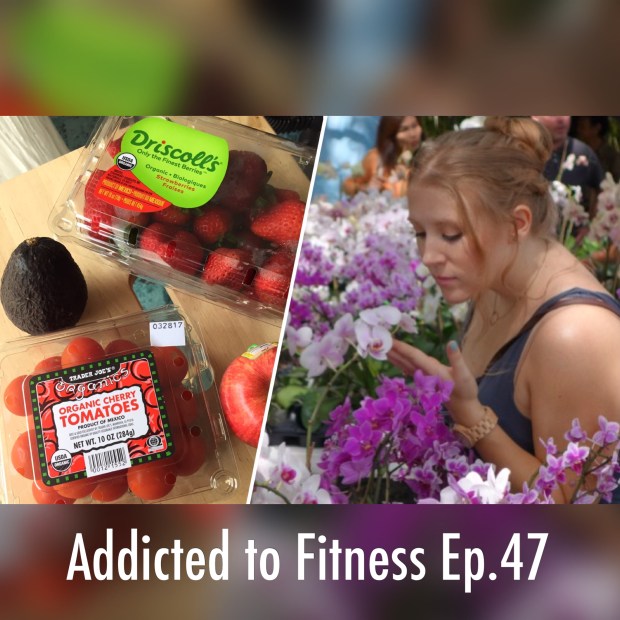
Numerous studies have linked the consumption of foods high in pesticide concentrations to adverse health problems. Shannon and I discuss one tool that can help consumers avoid these health risks. Every year, the Environmental Working Group (EWG) puts out lists of the “dirtiest” and “cleanest” produce in regards to pesticide contamination. According to their website (link), the EWG is a non-partisan environmental group that acquires their pesticide data from tests performed by the Food and Drug Administration (FDA) and United States Department of Agriculture (USDA). We go over both lists in their entirety in the episode but if you want a quick sample from both: Dirty: 1) Strawberries 2) Spinach 3) Nectarines; Clean: 1) Sweet Corn 2) Avocados 3) Pineapple. Hopefully this information helps you make the healthiest decisions possible when it comes to picking out produce.
Podcast pic 4-17

We love providing you all with helpful health & fitness information on a weekly basis and judging by our download numbers, you all love hearing it. We actually have a little homework for you all this week. We’d like to know when your favorite time to listen to the Addicted to Fitness podcast is. Do you listen while commuting to work? Sitting on the spin bike? Walking the dog? Whatever time, place or activity you’ve reserved for the podcast, we want to know about it. Feel free to send your responses to elementaltampa@gmail.com or send us a message on any of our social channels. We’d love to hear from you all.

Links to this week’s episode

iTunes: https://itunes.apple.com/us/podcast/two-big-struggles-allergies-pesticide-contamination/id1121420986?i=1000384465001&mt=2

Android: http://subscribeonandroid.com/addictedtofitness.libsyn.com/rss

Website: http://addictedtofitness.libsyn.com/two-big-struggles-allergies-pesticide-contamination
What’s on the Menu – Not So Sweet Potato

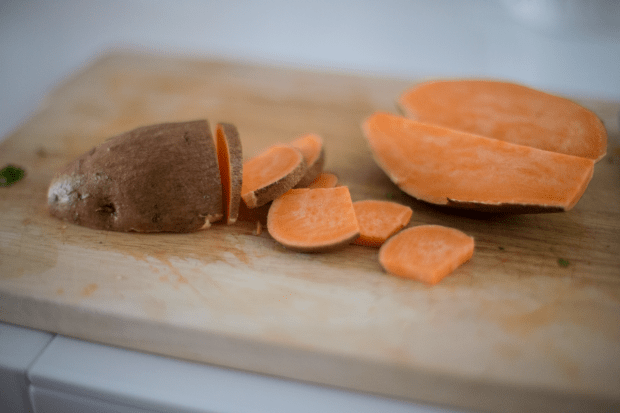
I really think the sweet potato should thank the Paleo movement for its recent rise in popularity. I grew up on a farm and the only time I recall seeing and/or eating sweet potatoes was in pie form at Thanksgiving. But then the paleo diet started to gain popularity in the early 2000s and BOOM! Sweet potatoes were in vogue.

I should mention that there is some debate amongst paleo diet followers if sweet potatoes are “paleo” or not. Regardless, I think sweet potato farmers should thank Robb Wolf and Dr. Loren Cordain for the 80% increase in consumption of their product in the U.S. between 2000 – 2014 (source). Shannon and I have certainly done our part to contribute to that increase as sweet potatoes frequently make their way into our weekly meal plans, and why not! They provide significant amounts of essential nutrients like fiber, vitamin C & B6 and manganese. They also provide more of the antioxidant beta-carotene than any other whole food on the planet (source). But what about their sugar content? Well, the actual truth of their sweetness may surprise you.

pexels-photo-89247

The glycemic index (GI) & glycemic load (GL) chart is a good tool to use when you’re trying to determine your body’s blood sugar & insulin response to certain foods (click here to see chart).  If you check out the chart you’ll see that sweet potatoes have a lower GI and GL than russet potatoes. If you’re trying to maintain a strict diet that contains only low GI & GL foods, a baked sweet potato may not be an option. Luckily there is a certain way to prepare sweet potatoes that will significantly lower their GI & GL.

While a baked sweet potato contains a relatively high GL of 22, a boiled sweet potato contains a GL of only 11 (source). This is great news! Wanna know why? Because in order to absorb more of those awesome nutrients contained in the sweet potato, you need to add fat to them. See where I’m going with this? That’s right, mashed sweet potatoes with butter and heavy cream may be the healthiest way to enjoy this multipurpose starch. You can also toss the steamed sweet potatoes in olive oil if you’re lactose intolerant.

Sweet potato pic

Sweet Tater Chips – One of my fav preparation methods

Above you’ll see a pic of my sweet potato “chips” before they head into the oven. No, they’re not exactly low carb, but they are covered in butter and olive oil. If you’re interested in indulging in these every once in a while, you’ll need a stainless steel vegetable slicer to CAREFULLY cut the sweet potato nice and thin. Coat them and a foil lined baking sheet in butter and/or olive oil and bake them at 400 degrees for approximately 15 minutes. Take’em out, flip’em, and cook for another 10-15 minutes. You can broil them for a few minutes at the end if you want to crisp them up.

Now that I’ve share one of my favorite sweet potato recipes, it’s time for you to return the favor. Feel free to send your recipes, complete with pictures, to us on Facebook, Instagram or Twitter. You can also email them to us at elementaltampa@gmail.com. We appreciate all feedback, especially the tasty kind.

Addicted to Fitness Show Notes – Fat + Coffee Taste Test

We kick off this week’s Addicted to Fitness discussing our training accomplishments for the week. Shannon is working towards logging 3 Peloton rides per week and is starting to perform more exercises to improve strength & endurance in her legs, butt and lower back. I on the other hand am focusing on building strength & mobility in my upper back with daily workouts at Tampa Strength, and increasing my run training. I love long distance running which is like nails on a chalkboard to Shannon who prefers long rides on her bike. This fact promted her to remind me that she kicked my butt in the bike portion of the sprint triathlon we did together back in 2011.

Screenshot 2017-04-09 at 8.09.21 PM

Post triathlon selfie of Shannon and I

After our training recap, Shannon and I launch into the main portion of this week’s podcast, which was inspired by a listener’s request. One of our favorite listeners, Lindsey, asked if we had any knowledge of the health benefits of the fat + coffee mixture known as “bulletproof coffee”. We’ve actually discussed the idea of fat + coffee in several episodes of the podcast (episodes #3, #8, #39) but we figured why not do a taste test of multiple types of these beverages. You don’t have to twist my arm to get me to drink coffee, especially ones that have my preferred macronutrient.

Bulletproof coffee was made popular by Dave Asprey, who claimed that a combination of high quality coffee blended with healthy fats, grassfed butter and MCT (medium chain triglycerides) oil, can act as a meal replacement and provide several other health benefits. Believers of fatten coffee claim that it provides immediate sustained energy, improves metal acuity, kickstarts your metabolism and puts you into fat burning mode (source). I’ve been drinking fatten coffee for sometime now and I can attest that I’ve experienced some of these supposed benefits, but I often vary my recipe. Shannon and I decided to taste test 4 different fattened coffee recipes:

  • Coffee + 2 tbsp Heavy Whipping Cream = 100 calories & 12g fat
  • Coffee + 1 tbsp Coconut Cream + 1 tbsp Coconut Oil = 165 calories, 18g fat, <1g sugar
  • Coffee + 1 tbsp Butter = 100 calories & 12g fat
  • Coffee + 1 tbsp Omega Power Creamer (Ghee, Coconut Oil, MCT oil) = 120 calories, 14g fat

I’ve been drinking the coconut cream & oil version for sometime and it is my go-to not only because of the taste (like a coffee & a pina colada had a baby according to Shannon) but because it helps me minimize the amount of dairy I ingest on a daily basis. Shannon actually enjoyed the butter version the most because of the non-oily mouth feel and it’s latte-like characteristics.

Coffee taste test pic

Fatten coffee works well for me because I feel that I function better running on fats opposed to carbs. If you’d like to become “fat fueled” this morning coffee concoction may be for you, but I do want to warn potential fatten coffee drinkers that regularly combining it with a high carb breakfast could lead to potential health problems (click here for article on other potential health problems associated with bulletproof coffee). I want to convey that you should always consult a physician or certified dietician before making any major additions to your diet, but please feel free to continue to send us podcast topics for future episodes.

Podcast pic 4-10

You listeners helped us set our download record in March and we’re on pace to set another record in April. Please keep listening, sharing and sending us feedback on how we can make Addicted to Fitness the best health & fitness podcast available. If you promise to keep helping us spread the good word of fitness, we promise to keep churning out interviews, product reviews, taste tests, and everything else you’ve come to enjoy about the podcast. Keep sharing and stay healthy this week peeps!

Links to this week’s episode

iTunes: https://itunes.apple.com/us/podcast/fat-coffee-taste-test/id1121420986?i=1000384200765&mt=2

Android: http://subscribeonandroid.com/addictedtofitness.libsyn.com/rss

Website: http://addictedtofitness.libsyn.com/fat-coffee-taste-test

What’s on the Menu – Dark Chocolate: Brain Candy

If you’ve checked out the “About” section of elementaltampa.com you would know that I wasn’t always as health conscious as I am right now. There was a point in my life where I didn’t care about a food’s nutritional content, calories and/or ingredients. My taste buds determined what I ate and that usually meant refined grains and sugar. Pasta, crackers, chips, fast food and of course CANDY! I was fortunate enough to pull up from the nutritional tailspin that I was in and now my cravings for “treats” has evolved.

72 cacao

I discovered that once I kicked processed foods out of my diet, my taste buds started being more appreciative of the flavor of whole foods, especially sweet items. This epiphany marks the point when my love for dark chocolate really began. I always liked chocolate, but it was mainly milk chocolate that consisted of more sugar than actual cacao. Once I modified my diet, I started gravitating more to dark chocolate with at least 70% cacao. I now enjoy Ghirardelli’s 86% cacao dark chocolate, which contains less than 2 grams of sugar per 1×1 inch square. I’m trying to condition my taste buds to enjoy the highest cacao content possible not just because it contains no sugar, but because of its numerous health benefits.

86 cacao

Much like the previous menu “spotlights” in this blog, dark chocolate with high cacao %’s contain extremely high levels of antioxidants. These antioxidants reduce the presence of free radicals, which can be responsible for chronic diseases/syndromes like type 2 diabetes, high cholesterol, hypertension and even cancer. In addition to its antioxidantive properties, dark chocolate may be one of the world’s most powerful “brainfoods” (source).

A 2009 study documented an improvement in the cognitive function (e.g. problem solving, memory recall, perception, etc.) of elderly adults that consumed foods rich in flavonoids like dark chocolate. The flavonoids in dark chocolate also promote cerebral blood flow which could help individuals who suffer from dementia or strokes (source). Hopefully these health benefits will motivate you to add a few pieces of dark chocolate to those Easter baskets you may be putting together in a few weeks.

chocolate-183543_1920

If you have a killer recipe that features dark chocolate, please send it our way. You can post it in the comment section below or email it to us at elementaltampa@gmail.com. Also, please share these blog posts with a friend. Help us spread the good word of proper nutrition.

What’s on the Menu – Superfoods in my Backyard

The Florida Strawberry festival takes place every year in the small, rustic town of Plant City. The event has been going strong for over 80 years, and it continues to grow each year with the addition of rides, livestock contests and popular music acts like Little Big Town, Rascal Flatts and Elle King (one of Shannon’s personal fav’s). The vast majority of the food at the festival is typical fair food; deep-fried and/or covered in sugar. However, the festival’s namesake is readily available and it when it comes to nutrient rich foods, it’s hard to beat strawberries, or any berries for that matter.

Strawberry shortcake

I consider myself pretty lucky to live in an area that has access to substantial berry crops every year. The farms in my area plant over 10,000 acres of strawberries annually, along with other berries like blueberries and blackberries (source). You best believe that when berry season rolls around, Shannon and I stock up on a weekly basis.  Not only do they taste delicious, but they’re often considered a superfood because of their nutritional benefits.

Possible health benefits associated with eating berries include reduced disease susceptibility, increased insulin sensitivity and improved arterial function. They are also high in essential nutrients (ones our bodies can’t make) like vitamin C, K, manganese and folate (source). I’m a huge berry fan, but I’d be remiss if I didn’t mention strawberry’s regular appearance on the Environmental Working Group’s (EWG) Dirty Dozen List.

Wish farms berries

Organic berries from Florida’s Wish Farms

Since 2004, the EWG has been creating lists of the dirtiest and cleanest produce in regards to pesticide contamination. Strawberries often find themselves at the top of the “dirty” list, most likely due to year round production brought on by high demand. According to EWG’s website, Americans individually eat an average of 8 pounds of strawberries a year. Even though we’re still discovering what negative side effects eating foods containing pesticides can have on our health, the EWG recommends that you buy organically grown strawberries whenever possible. If you like to check out what other produce made it onto EWG’s lists, head on over to their website.

Menu pic 3-30

I believe the reporting of high contamination levels in produce like strawberries will help increase the demand for organically grown produce. The overuse of pesticides and the negative effect its had on our agricultural industry is a discussion for another day.

Whether you buy organic or conventional berries, I want to hear how you prefer to enjoy them. Do you throw them into a smoothie, add them to yogurt, or just eat them by the handful like I do? However you enjoy them, please feel free to let us know by leaving a response in the comment section below or emailing it to us at elementaltampa@gmail.com.

Addicted to Fitness Show Notes – Crutch Foods & How To Avoid Them

We were working late again on this week’s podcast, which is pretty evident straight off the bat as poor annunciation (listen for the excellent “recrap” instead of “recap” moment) led to some pretty funny moments amidst our discussions.

Our first point was serious praise for all you listeners who have truly stepped up in the recent weeks and are leading the podcast to some exciting milestones. Keep up the sharing and listening as we work to make the podcast better than ever!

In our look back on our past week of training, Nick called out his most recent accomplishment – taking his first barre class at Pure Barre in South Tampa. You’ll be hearing more about this experience in the future, but for now here’s a little taste…

Me at barre

I’ve never felt so uncomfortable at a bar

Meanwhile, I got back on the Peloton cycle and had to make some decisions of my own, reevaluating my fitness goals and identifying the changes I needed to make. We’ll go into it more in the future, especially the SMART (Specific, Measurable, Attainable, Realistic, Timely) parameters that you can use to set successful goals.

One of the biggest areas of health and fitness goal setting is diet, which brings us to this week’s main podcast topic – Crutch Foods.

food-salad-restaurant-person

Any of these items your crutch food?

The first question we seek to answer is what is a crutch food?

Nick’s definition of crutch food included more of an emotional aspect = food that elicits a pleasurable feeling, or rather comfort foods.

My definition focused more on it being the habitual use of comfort foods so that it becomes an unconscious addition to almost every one of your meals. You don’t eat the food item for its nutritional value, but rather it takes over as a reliant go-to.

For me, my recent crutch food was an old friend/foe – breads and carbs – but I have also used cheese and dairy as a crutch food in the past, thus the reason I was a vegan at one point in time.

Nick’s crutch food is coffee. Though he’s not currently drinking an unhealthy amount he drinks it regardless of whether he needs the benefits it provides or not. It has become something he leans on, like a crutch.

food-kitchen-cutting-board-cooking

A diet of whole & seasonal ingredients can lead to better health

This brings us to how do you shake or avoid crutch foods.

Though it may come as a surprise, a great resource recently came out in the April 2017 issue of  Martha Stewart Living. Since Nick is as big of a Marth Stewart fan as I am (which we have a good laugh about – though he denies just how much he loves her), we talk through the article “The New Way to Eat” and the 12 principles it outlines to put the focus back on whole, seasonal foods.

The 12 Principles:

  1. Expand Your Food Horizons – be adventurous and explore different types of whole foods; incorporate more in your diet
  2. Get Satisfaction – Remove distractions while eating to fully ensure your focus is where it should be
  3. Let Things Simmer – Embrace some crockpot-style cooking to capitalize on the benefits
  4. Be Smart About Starch – Carbs aren’t the devil and some like starches can be a smart part of your diet
  5. See Seafood Differently – Get some of the original smart food: seafood (avoid large predatory fish – high in mercury)
  6. Wine is Fine – Studies show that some wine, especially the antioxidant-rich dark reds, can have some added benefits in moderation
  7. Go for Full-Fat – Though some can’t handle dairy, those who can, will see benefits from full-fat dairy which is actually easier for our bodies to digest than processed, low-fat versions
  8. Fill Up On Fiber – Fresh produce has more than vitamins; it’s loaded with fiber which is vital to our digestion
  9. Finish Strong – Use herbs as a way to pack a tasty and satisfying punch to your meals
  10. Eat Sweets with Intention – A zero-tolerance policy doesn’t work when it comes to desserts so indulge wisely with the utmost intention on enjoying quality in your sweet treats.
  11. Take the Spice Route – Spices pack more than a punch of flavor, some have incredible anti-inflammatory and brain-benefiting powers, so use them when you can
  12. Lock It In For Life – Focus on real food, not just for a day, but every day to create lasting impact

Nick and I break down each of the principles and talk about how they can be used to formulate a good diet and strong lifestyle. Many of the principles are ones we already subscribe to, but it’s easy to forget just how important healthy eating is. The article provides an important reminder.

Podcast Pic 3-27

Thanks again for making March our best month yet. Keep listening and sharing the podcast and if you have time please give us a rating and review in iTunes. Be sure to keep connected with us and feel free to send any feedback via our social channels or email elementaltampa@gmail.com.

Links for this week’s episode:

iTunes: https://itunes.apple.com/us/podcast/crutch-foods-how-to-avoid-them/id1121420986?i=1000383159057&mt=2

Android: http://subscribeonandroid.com/addictedtofitness.libsyn.com/rss

Website: http://addictedtofitness.libsyn.com/crutch-foods-how-to-avoid-them


What’s on the Menu – Efficiency Nut

I don’t know who the PR person for walnuts is, but I feel like they’re doing a pretty lackluster job. Pistachios has Richard Sherman and a giant cartoon elephant, voiced by John Cena, telling me to pick up a bag. California almonds have SportsCenter anchors pushing them and it seems like Mr.Peanut as been telling us to eat peanuts, which aren’t nuts, before the TV was even invented. All these nuts are getting positive press, but the walnut is still waiting for its big break.

I think I may have an idea of why walnuts aren’t getting promoted as much as they should. The outside of a shelled walnut is covered in a thin, paper-like “skin” that some people attest to having a bitter taste. The flavor of the skin can be off-putting to certain folks, but much like an apple, there are a ton of nutrients in the skin of a walnut.  It’s believed that 90% of the walnuts beneficial organic compounds are contained in the skin.

food-walnut-nut

The beneficial compounds contained in walnuts include a special form of vitamin E, hard to find antioxidants and the highest alpha linolenic acid (omega-3) concentration of any nut (source). The positive health aspects of walnuts prompted the Hospital Clinic of Barcelona and Loma Linda University to conduct a study on the daily consumption of walnuts. Preliminary results of the study suggest that daily consumption of 1.5 oz of walnuts can reduce LDL cholesterol & inflammation which can lower your chance of developing heart disease (source).

MenuPic 3-23

If all these health benefits aren’t enough to make you run out to buy a bag of walnuts, the fact that they are one of the cheaper nuts should be all the convincing you need. Raw nuts, which is what you should buy if you want the maximum health benefits, can be a bit pricey. However, compared to cashews, almonds or the luxurious macadamia nut, walnuts are at least $1 cheaper per pound (according to my research).

Walnuts: the nut with the highest ROI. It’s no “get crackin'” but I think it has potential. Let me know if you have any suggestions on what walnuts’ promotional catch phrase should be. You can connect with us on Facebook, Instagram or Twitter or email us at elementaltampa@gmail.com.

Addicted to Fitness Show Notes – 2nd Annual Girl Scout Cookie Challenge

I had so much fun last year, I had to do it again this year. That’s right. We’ve got another Girl Scout cookie challenge on this week’s Addicted to Fitness podcast. If you didn’t hear the first Girl Scout cookie challenge, I urge you to go back and listen to that episode (link). The ultimate goal of the challenge is to burn off the calories contained in the cookies as quickly as possible. Last year we used battle ropes and jump squats. This year we tried a different piece of exercise equipment.

I’ll admit to you guys now, we didn’t get actual Girl Scout cookies. However, Wal-mart makes some pretty damn good knockoffs. I woofed down 3 of the Tagalongs look alikes and then jumped onto our Peloton cycle (click here for more info on this awesome piece of machinery). I choose to go with spinning as my exercise choice because we discovered in a past episode of the podcast (link) that it burned a tremendous amount of calories in a short period of time. Shannon did a great job entertaining everyone with information about the cookies’ nutritional facts, her recent yoga training, and Wim Hof all while I sweat out 240 calories worth of sugary goodness.

Show notes pic 3-20

This year’s challenge was just as tough as last year’s

This is a fun challenge to do once in a while, but this is by no means a recommended way to exercise. I would never suggest that anyone eat RIGHT before working out, let alone eat COOKIES! Even though I worked off the calories associated with the cookies, that doesn’t mean there aren’t determintal health effects associated with eating nutrient poor items that are high in sugar. If you have a strong grasp on your fitness, and you can afford to have a sweet treat every so often, go for it. Just don’t buy a year’s supply of Girl Scout cookies when you see them set up in front of your grocery store.

Podcast pic 3-20

We are big fans of fun fitness challenges, and if you have any in mind, please feel free to email them to us at elementaltampa@gmail.com. We’d also love it if you gave us a rating & review in iTunes and please share the podcast with a friend. We want to help as many people as possible enhance their quality of life by improving their health & fitness. I believe that this podcast can do that, but only with your help. Thanks in advance and stay healthy this week peeps!

Links to this week’s episode

iTunes: https://itunes.apple.com/us/podcast/addicted-to-fitness-podcast/id1121420986?mt=2

Android: http://subscribeonandroid.com/addictedtofitness.libsyn.com/rss

Website: http://addictedtofitness.libsyn.com/the-2nd-annual-girls-scout-cookie-challenge