health

What’s on the Menu – Following KISS

I’ve discovered that following KISS has brought a certain level of ease to my life. Just to clarify I’m not talking about the rock band Kiss. I’m referring to the acronym KISS, which stands for “Keep It Simple Stupid.” I try to apply KISS to all aspects of my life, but one aspect in which I use it the most is my nutrition. I’ve tried my best to convey my predisposition to consuming food & drink that consists of the fewest whole ingredients possible. Which is why it should be no surprise that my preferred protein powder consists of only one ingredient.

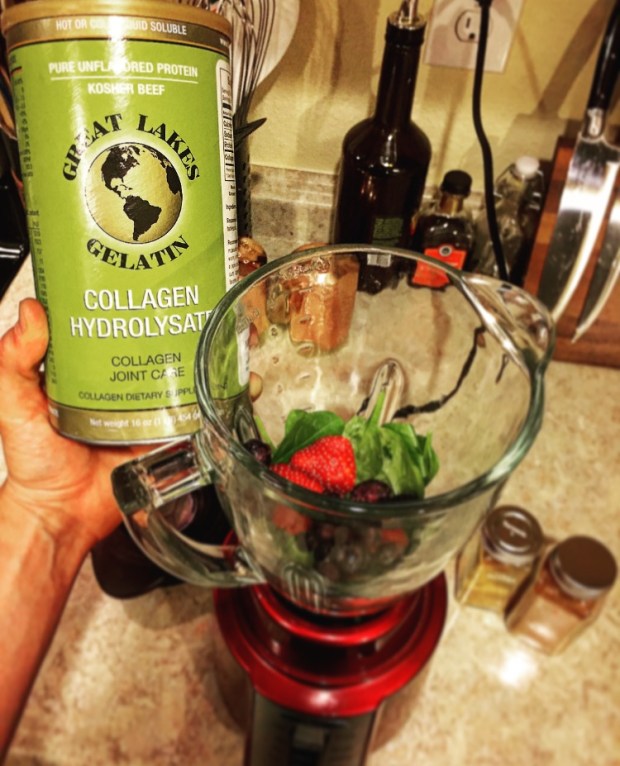
The ever expanding selection of protein powders has, in my opinion, reached a ridiculous level. Trying to be educated on the laundry list of ingredients contained in certain protein powders can be even more overwhelming. That’s why I use collagen hydrolysate from Great Lakes when I want to add a little protein to my morning coffee or veggie & fruit smoothie. This brand of collagen hydrolysate is created by the application of heat and/or enzymes to beef collagen from grass fed cows to change its molecular weight. The change in molecular weight is what gives the hydrolysate the ability to dissolve in both hot and cold liquids. Not only does it dissolve in essentially any beverage, it is LEGITIMATELY unflavored. They don’t add any real or artificial sweeteners in an attempt to make your healthy meal replacement drink into a nummy milkshake. Nutritionally speaking, 1 tbsp contains 25 calories, 6g of protein and 0g of both carbs and fat. It is a pure protein that is high in amino acids like glycine, lysine and proline which are essential for the growth of hair, skin, muscle, cartilage and ligament cells (source). Oh and the price? Try about $23 for the can pictured below, which contains about thirty-one 2 tbsp servings. I’ll admit that the health benefits and affordability of this protein supplement are enticing, but it’s the recommendations from health & nutrition professionals I trust that really sold me on it.

I’ve heard nutrition experts like Vinnie Tortorich, Anna Vocino and Dr. Rhonda Patrick recommend Great Lakes collagen hydrolysate many times. I’ve even seen Tim Ferriss feature it in a recent video about his morning routine. I trust these experts and appreciate the fact that this particular protein powder matches my KISS approach to nutrition. Let us know if you practice KISS and which areas of your life you apply it to. Feel free to send us feedback at nick@elementaltampa.com or hit us up on Facebook, Instagram or Twitter.
protein-powder

Addicted to Fitness Show Notes – From the Vault: Protein Preferences

I got my toes in the water, ass in the sand. Not a worry in the world, cold beer in my hand. Life is good today. Life is good today

I imagine I’ll be humming along to this Zac Brown tune while you all listening to this week’s podcast. Shannon and I are off to Mexico for a friend’s wedding, but we don’t want to leave you loyal listeners without your weekly dose of health and fitness information. Which is why we reached into the ETT Wrap show vault for a throwback episode of the Addicted to Fitness podcast.

Shannon and I start off this classic episode discussing our weekly workouts, group training and ETT’s first team competition, the Mud Endeavor 5k. For those unfamiliar with the Mud Endeavor, its a great obstacle course race based out of West Central Florida. Having already ran this race, I highly recommend it and suggest anyone looking to challenge themselves, consider obstacle course racing. After all the mudrun talk, we get into the real “meat” of the episode.

The remainder of the podcast focuses on the wide variety of protein sources available to meateaters and non-meateaters. Shannon describes her experience as a vegan and lists off her go-to protein sources (legumes, nuts, seeds) along with what type of supplements she had to take in order to get all her essential nutrients (B12 & iron to name a few). We also read off a ton of our listeners favorite protein sources which include peanut butter, yogurt, eggs, cricket flour, red meat and many more. Reeling off our protein preferences leads to an interesting discussion about the importance of gut health, which we will definitely be talking more about in a future episode.

podcast-pic-2-13

We’ve got a lot of great podcasts lined up for you all, including next week’s episode which I believe is our best episode to date. You’ll definitely want to subscribe to the podcast if you haven’t done so already, and please rate, review and share Addicted to Fitness with anyone and everyone. Thanks again for all the support and stay healthy this week peeps!

Links to the Addicted to Fitness podcast

iTunes: https://itunes.apple.com/us/podcast/addicted-to-fitness-podcast/id1121420986?mt=2#episodeGuid=ff12ecccd3885916e7d604ce5fdecb63

Android: http://subscribeonandroid.com/addictedtofitness.libsyn.com/rss

Website: http://addictedtofitness.libsyn.com/from-the-vault-protein-preferences-for-vegans-meateaters

What’s on the Menu – Grocery Shopping Prerequisite

We’ve all done it. It’s a mistake that I’m sure grocery stores are happy people make week in and week out. No, I’m not talking about forgetting your reusable grocery bags. I’m talking about going to the grocery store HUNGRY.

We seemed to be focused on grocery shopping this week on elementaltampa.com, and for good reason. The choices you make at the grocery store can have a significant effect on how you look and feel. You may not realize it but those choices can be influenced by the level of hunger you have before you step into the grocery store. In as 2013 study, researchers found that individuals that went grocery shopping while “hungry” were more likely buy high-caloric unhealthy foods (chips, candy, etc.) than those that ate before shopping for groceries. Another study confirmed these findings by documenting individuals that went grocery shopping before dinner time, 4-7pm, buying more unhealthy foods than those people that went shopping after lunch, 1-4pm (source). The “feast or famine” mentality left over from our primitive ancestors may want us to eat everything in sight when we’re hungry, but there are certain steps we can take to prevent us from bringing home a barrel sized container of cheese balls.

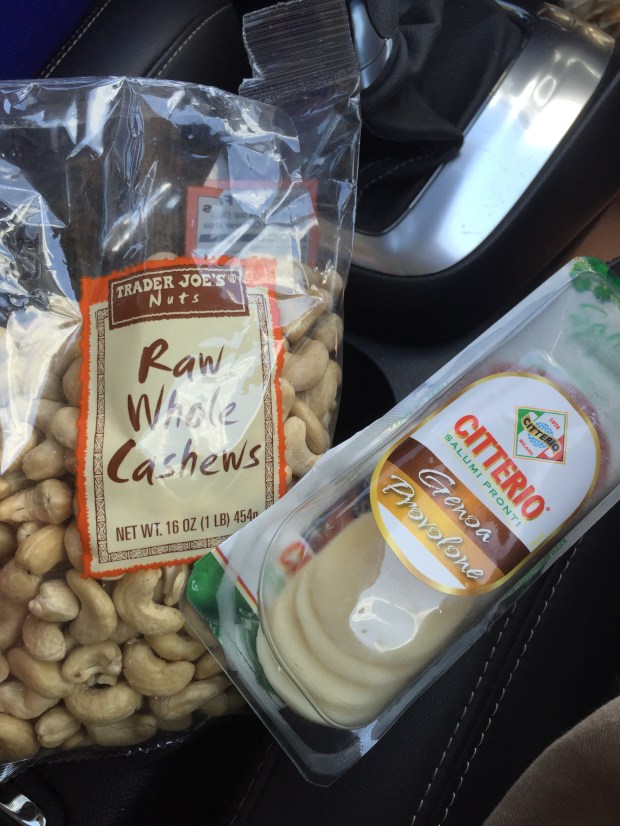
Shannon and I have discovered several ways to prevent impulse buys while grocery shopping, but none work as well as eating before you go. A couple of our go to pre-grocery shopping snacks are raw cashews and/or cured meat with cheese. Both snacks are nutritious (cashews: 6g fat, 4g carbs, 2.5g protein per ounce; genoa+provolone: 26 g fat, 21g protein, no carbs per package), shareable, portable and most importantly satiating. I’ve, and some scientific research, found that foods containing a significant amount of protein and/or fat will help you stay fuller longer and hold back that pesky hunger hormone gherlin.

Hopefully you are already practicing this pre-grocery shopping ritual. If so, send us pictures of your pre-grocery shopping snacks. We’re always looking to expand our repertoire.

cashews-salami


Addicted to Fitness Show Notes – The Macros Game Returns!

I’m giving Shannon the week off from writing the show notes to ensure that she is in tip top shape for our trip to Mexico next weekend. Even though she’s taking a week off from the show notes, it doesn’t mean you won’t get to hear her on the this week’s Addicted to Fitness podcast.

We start this week’s episode with a recap of our past week of training. Even though Shannon was feeling a little under the weather, she was able to complete a couple short sessions on our beloved peloton cycle. After our training recap, Shannon discusses her upcoming yoga “immersion” weekend, which is part of her Bella Prana yoga teaching certification program. This certification process will provide Shannon with a whole new skill set and allow her to pursue one of her passions. Shannon discussing pursuing her passion was the perfect segue to my big announcement about Elemental Training Tampa (ETT).

If you’ve listened to the podcast before, I’m sure you’ve heard me mention that providing personal training through ETT is where my passion lies. However, I haven’t had the opportunity to make ETT my full time vocation, until now. I’m proud to announce that starting in March, ETT will be a full time health & fitness operation. We have been invited by the Tampa Strength Academy to operate our training system at their new location in South Tampa. When I started ETT back in 2014, I always wondered if I’d be able to go full time into fitness. Now that the opportunity has actually presented itself, I almost can’t believe it. I’ll be writing another post about the entire process of deciding to take ETT full time, but needless to say, I couldn’t be happier.  As if that announcement wasn’t enough, we’ve got a brand new edition of the MACROS GAME!

shopping-cart

For anyone that is unfamiliar with the Macros Game, it is a nutritional trivia game that requires contestants to guess the macronutrient (fat, protein or carbohydrate) when given its amount in grams contained in 1 serving of a specific food. It may sound complicated, but once you hear it in the episode, I’m sure you’ll get the hang of it. We’ve done holiday editions in the past, but this week we grab nutritional info from food items we picked up on a recent trip to the grocery store. We would love you all to play along at home and let us know if you have more nutrition knowledge than Shannon or I.

podcast-pic-2-6

When you all send your scores for this week’s Macros Game, we’d love it if you’d provide us any feedback on the podcast. Better yet, head to the iTunes store, and give us a rating and review. I say it every week because its true. Your feedback helps us create a better product. Thanks again for all the support and stay healthy this week peeps!

Links for this week’s episode

iTunes: https://itunes.apple.com/us/podcast/grocery-shopping-edition-macros/id1121420986?i=1000380846108&mt=2

Android: http://subscribeonandroid.com/addictedtofitness.libsyn.com/rss

Website: http://addictedtofitness.libsyn.com/grocery-shopping-edition-of-the-macros-game


What’s on the Menu – Cauliflower: The Veggie Drawer’s Utility Player

If you all are anything like me, you knew when your mom or dad was cooking cauliflower for dinner. Hell, you could probably smell it before you even walked in the house. In today’s post, we’re going to go over several reasons why you should eat cauliflower, but I get why kids don’t exactly go crazy when they see it on the dinner table. The smell, the stark white appearance and the overall bland flavor would turn off any 8 year old. The beauty of this “blank canvas” of a veggie is in its versatility and the fact that it is a nutritional “powerhouse“.

cauliflower-1465732_1920

Cauliflower belongs to the cruciferous vegetable family, which includes other highly nutritious veggies like kale, broccoli and turnips. One cup of cauliflower contains 5g of carbs with over half of those carbs coming from fiber. The phytonutrients contained in cauliflower include a significant amount of Vitamin C, K and folate. It also contains an organic compound known as glucosinolates, which when broken down during the cooking process produces cauliflower’s less than appetizing smell, but also produces several other compounds that have been found to have anti-cancer, anti-inflammatory and anti-oxidative effects (source).

screen-shot-2017-02-01-at-6-12-41-pm

You know me, I’ll sacrifice taste for a nutritional payoff (e.g. sardines). Luckily, cauliflower is so adaptable that you can use it to make some of your favorite carby side dishes. Instead of white rice, try riced cauliflower (pictured above). Instead of tater tots, try cauliflower tots. Instead of a wheat based pizza crust, try a cauliflower pizza crust. Yes that’s a real thing! Former guest of the Addicted to Fitness podcast Anna Vocino has an awesome cauliflower pizza crust recipe on here website. Give her recipe a shot and let me know how it comes out. We’d love to see pictures of how you dress up your cauliflower.

Addicted to Fitness Show Notes – Our Favorite Smartphone Fitness Apps

Written by Shannon, aka Cassandra. 

Sometimes you simply can’t avoid getting sick. This week I caught a cold which resulted in a husky alter-ego that Nick named “Cassandra.” So don’t mind the raspy co-host for today’s episode.

Ironically, we’re talking about health & fitness apps today! Specifically, Nick and I share our favorite apps that we use every day, then we go through apps from listeners and friends who submitted their picks.

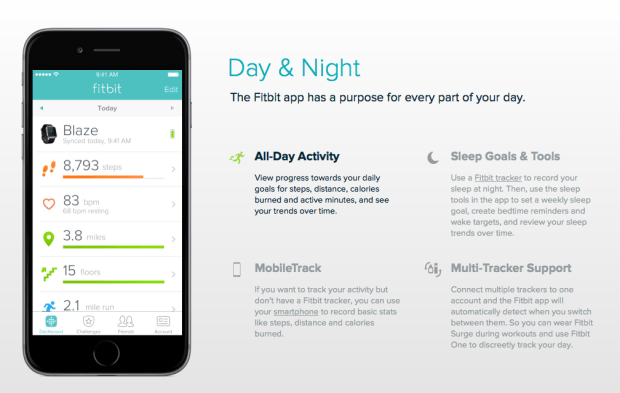
Following up on our previous episode where I reviewed the Fitbit Charge 2, I dive into the user-friendly mobile app that serves as the real power behind any Fitbit. This free app is where you setup your actual Fitbit device, establish your goals, and even where you can track a few other handy health and fitness items.

The Fitbit app includes a very easy user interface, with a main screen that highlights some of your main daily metrics like: steps, floors climbed, miles covered, calories burned, activity and water consumed. You can also get info on your resting heart rate, calories consumed, sleep, etc.

screen-shot-2017-01-30-at-5-07-05-am

Picture courtesy of fitbit.com

The best part is the integration with other apps, including Nick’s food log app that he breaks down further, and the peloton app, which sends workout info from the bike to your Fitbit app.

Nick provides a review of the Lose it! app, which is a food journal. While neither of us are big on counting calories, we do like holding ourselves accountable and it’s easy to lose track of what you’re eating. This app is a great way to ensure you’re truly seeing how much macronutrients you’re taking in each day, your calories consumed and your calories burned.

The food catalog for Lose It! is truly impressive with millions of food items, ingredients and meals alike, already logged into the database. You can even scan barcodes with a built-in barcode scanner to make it easy to identify specific food items.

Snap it!, which is an extension of the Lose It app, even gives the option of identifying food by snapping a picture, which it then tries to match up to corresponding nutrition information. It’s just not incredibly accurate, so it’s more effective for simple items (e.g. piece of fruit, protein bar, etc.).

There is a premium version of the app, but the free version offers great options and even integrates with other fitness apps to provide information like steps and exercise.

Getting into the listener’s favorite fitness apps, we list them off for ya:

At the end of the day though, it doesn’t matter if you use fitness apps or not. Use whatever tools you need to hold yourself more accountable and help you to reach your fitness goals.

podcast-pic-1-29

We wrap up this episode getting amped up for the new Facebook Live workout that is now available on the ETT Facebook page. Perfect little 25-min workout video that includes a warmup, 15 min HIIT workout and an ab-centric cooldown.We’ve got exciting episodes coming up; please reach out at elementaltampa@gmail.com and let us know what topics you’d like us to discuss on a future episode. Thanks for listening!

Links for this week’s episode

iTunes: https://itunes.apple.com/us/podcast/our-favorite-smartphone-fitness/id1121420986?i=1000380559728&mt=2

Android: http://subscribeonandroid.com/addictedtofitness.libsyn.com/rss

Website: http://addictedtofitness.libsyn.com/our-favorite-smartphone-fitness-apps

What’s on the Menu – The Other Red Meat

If you’ve been paying attention to my weekly menu spotlights, you’ve probably realized that I don’t discriminate when it comes to food. Well, that’s not entirely true. I do my best to stay away from anything that contains refined sugars and grains, but other than that I’m an omnivore through and through. I say that because last week’s post and today’s post feature foods that are not exactly vegan friendly. I want my vegan friends to know that I’m not discriminating against you all. Shannon is a former vegan and she still makes some delicious vegan dishes and I promise to feature one in an upcoming post. But today’s post is dedicated to very special type of red meat.

The steaks featured below can’t be found in the grocery store. They don’t come from any factory farms or feedlots. They come from the fields, woods, and prairies. These are steaks from a whitetail deer. Deer meat, better known as venison, along with other wild game meat tend to have lower caloric and fat content but equal amounts of protein compared to meat from conventionally raised livestock. Venison in particular has approximately 150 calories, 24 g of protein and 1.5 g of fat per 3.5 ounce serving (source). Any regular readers of the blog will know that I am not afraid of fat so the idea of the meat having less fat doesn’t exactly thrill me, but venison and other wild game have a better ratio of omega 6 to omega 3 fatty acids, which researchers have found could help mitigate certain chronic diseases/conditions (source). Eating wild game like venison not only provides nutritional benefits, it also allows you to be less reliant on factory farmed meat.

screen-shot-2017-01-25-at-5-47-05-pm

Legit wild game is not regulated by the USDA, which means it cannot be sold in supermarkets. I believe this is a good thing because it inspires people to take up hunting or in most instances, connect with a friend or family member that does hunt. Having grown up in a hunting family, I can tell you from experience that hunters are extremely generous when it comes to sharing their harvest. Take these folks up on their generosity because the less reliant we are on meat from factory farms, the better off we, and the planet, will be.

If you already eat wild game on a regular basis, let us know what your favorite type and preparation method is. Feel free to contact us elementaltampa@gmail.com with any recipes.

Addicted to Fitness Show Notes – Heart Rate Training & Fit Bit Breakdown

The first month of 2017 is nearly complete and some may be welcoming new habits after weeks of hard work setting new routines. On this week’s podcast, Nick and I kick-off by sharing the things we’ve added to our own fitness/health routines so far.

Nick started the year by doing a series of monthly challenges. For January, he’s given up an overindulgence – alcohol. In addition, he’s incorporating daily morning workouts to try and lose the pesky holiday pounds that almost all of us pack on.

I, on the other hand, finally started exploring a quest into a new topic of my health, which is also the topic of our podcast today – Heart Rate Monitoring and Training.

podcast-pic-1-23

Nick shares the formula for how to calculate your Zone 2 (fat burning zone):

180 – your age = your zone 2 beats per minute (BPM) OR being able to hold a conversation while exercising (e.g. if you’re 30 years old, you subtract that from 180 and your Zone 2 heart rate is 150 bpm, give or take a few beats)

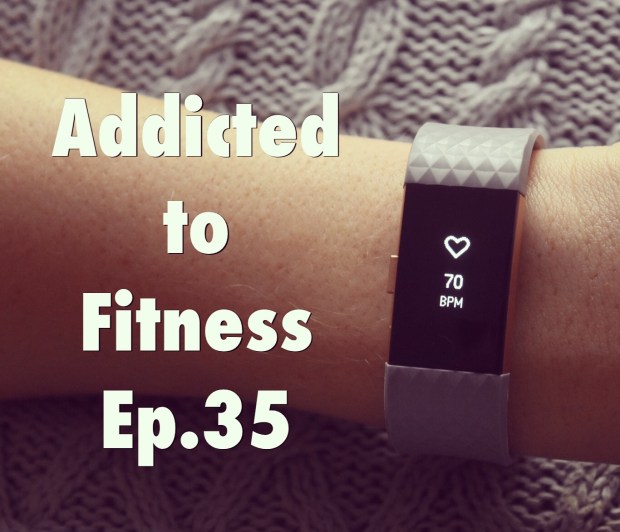
In order to better understand my own heart rate efficiencies (or otherwise) I invested in the best monitor for the money I was looking to spend and bought the Fitbit Charge 2.

My motivations for wanting to better understand this element of fitness and how it contributes to my health comes after long battles with stress and poor sleep, two things many people are likely grappling with as well. The Peloton classes introduced me to how heart rate training can improve your fitness and I had read countless articles about how it benefits your overall health.

The Mayo Clinic states that a normal resting heart rate (RHR) for adults is 60 to 100 beats per minute. Fitbit compiled their substantial user data and estimated 50-90 BPM is average for an adult.

So what affects your resting heart rate? Well, as it turns out, quite a lot:

  • Activity level
  • Fitness level
  • Air temperature
  • Body position
  • Emotions
  • Body Mass Index (BMI)
  • Medications

You can impact your own heart rate in a number of ways:

  • Physical exercise (15-20 min/day will lower RHR)
  • Reduce body fat/increase muscle mass
  • Mindfulness

In terms of exercise, Zone 2 training is how many athletes build endurance. It’s all about low intensity for long periods of time – staying in that fat burning zone.

I’ve been experimenting with some of the Zone 2 training on the Peloton so far and have already seen some impact on my RHR.

fitbit

Much of what I’ve learned in the last few weeks is due to my Fitbit Charge 2. Costing a fairly reasonable $130 (to start) the Fitbit Charge 2 was highly rated by CNET, even more so since Fitbit launched a software upgrade late last year.

In the last part of the podcast I get into the details of my own review of the fitness monitor, including the ups and downs (because nothing is perfect, right?).

Pros:

  • Not bulky
  • Changeable bands
  • Useful mobile app/interface
  • Battery life is good (4-5 days before needing a charge)

Cons:

  • Absolutely can’t get wet
  • Charger is awkward

Some of the features I like most include a cardio fitness rating. It gives a rating based on its estimated VO2 Max and indicates your overall performance in endurance-based activities. Currently, mine is sitting around 38-42, which is “good – very good” for a female of my age (positive sign!).

The app is a whole other side of this product, which we’ll get into in a future episode, but as of now, I would recommend the Fitbit Charge 2. It holds me to new levels of accountability, further helping me stick to a healthy lifestyle.

Now all I need to work on is adding some friends to my Fitbit circle!

We’d love hear what goals you set or accomplished so far this year. Please feel free to share them with us in the comment section, on Facebook or email us at elementaltampa@gmail.com. Your feedback and support has helped us grow into a 5 star rated podcast and we are extremely grateful. Keep rating, reviewing and sharing the podcast and let’s stay healthy year.

Links for this week’s episode

iTunes: https://itunes.apple.com/us/podcast/addicted-to-fitness-podcast/id1121420986?mt=2

Android: http://subscribeonandroid.com/addictedtofitness.libsyn.com/rss

Website: http://addictedtofitness.libsyn.com/a-breakdown-of-heart-rate-training-the-fit-bit-charge-20