fat

What’s on the Menu – We may be getting a bit nutty

I believe the first time I heard about the benefits of coconut oil was when I heard Dave Asprey (creator of Bulletproof coffee) talk about it on Joe Rogan’s podcast back in 2012. Asprey described how his bulletproof coffee, which contained an ingredient prominent in coconut oil, helped him lose weight, have more energy and be sharper mentally. Even though I wasn’t quite prepared to start downing his bulletproof coffee, I began hearing more and more individuals I consider experts in nutrition and/or medicine talk about the benefits of coconut oil.  People like Vinnie Tortorich, Dr. Rhonda Patrick and Mark Sisson were signing its praises, which in my mind gave me the greenlight to start incorporating it into my diet anyway possible.

I know I’ve talked about my love for coconut oil many times on this blog. Heck, I think Shannon and I have done at least two Addicted to Fitness episodes where we taste tested a coffee + coconut oil concoction (click here to listen). However, I recently learned that my LDL cholesterol is extremely high. I believe the primary culprit for this is my genes, but I’m also analyzing items in my diet that may drive up “bad” cholesterol. Which is why I’m gonna take a closer look at a few of the pros & cons associated with coconut oil consumption.

Pros

  • Contains medium chain triglycerides (MCTs) which unlike long chain triglycerides can be easily accessed by the body as an energy source and are less likely to be stored as fat (source)
  • Contains high concentrations of lauric acid, which has been shown to aid in the treatment of viral, bacterial and fungal infections (source)
  • The consumption of MCTs may increase “good” HDL cholesterol (source)
  • The consumption of MCTs has also been linked to improved cognitive function in Alzheimer’s patients (source)

Cons

  • Coconut oil is ~50% lauric acid which some researchers believe acts as a long chain triglyceride, which could raise “bad” LDL cholesterol (source)
  • Coconut oil only contains 10-15% MCTs (if you subtract lauric acid), which greatly reduces its ability to boost metabolism (source)
  • Certain commercially sold coconut oils can be highly refined & processed which greatly reduces its health benefits (source)
Menu pic 6-2

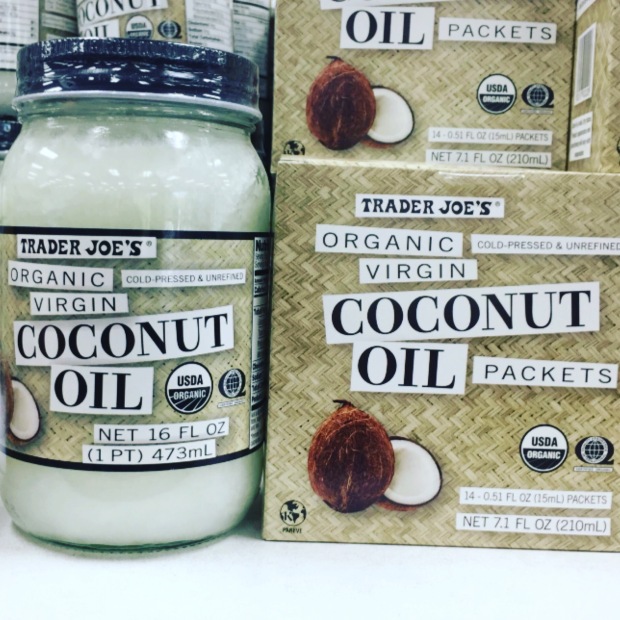
My preliminary research leads me to believe that there is much more upside to using unrefined, virgin coconut oil than downside. However, for someone like myself, who is genetic predisposed to have high LDL cholesterol, it may be wise to use it sparingly. Although, I’ve recently learned that not all LDL cholesterol is “bad” and I plan on getting more blood tests done to determine the makeup of my levels. Until then, I’ll limit my coconut oil use to cooking, instead of throwing it into smoothies & my morning coffee.

Just because I’m cutting down on my coconut oil use, it doesn’t mean I don’t want to hear how you use it. Whether it’s for cooking, skin care or cold remedy, please feel free to send your coconut oil uses to elementaltampa@gmail.com. We’d also really enjoy it if you send us a pic on our various social channels (Facebook, Instagram or Twitter).
What’s on the Menu – I can see clearly now

None of us are getting any younger. I know that’s not exactly breaking news, but I recently reached the point in my life where I’m beginning to feel the effects of aging. I cruised through my 20s with little concern every time my birthday rolled around. Now, as I inch closer to 34, I’m starting to experience issues that would have never affected me 5 years ago.

My muscles take a little longer to recover from a tough workout. It’s hard for me to be energetic the day after a poor night’s sleep and if I decide to forgo “clean eating” for a night, my digestive system is in turmoil for at least 24 hours. Fortunately, there is one bodily function that has yet to be touched by the hands of father time and I believe that has a lot to do with today’s menu spotlight.

Salad

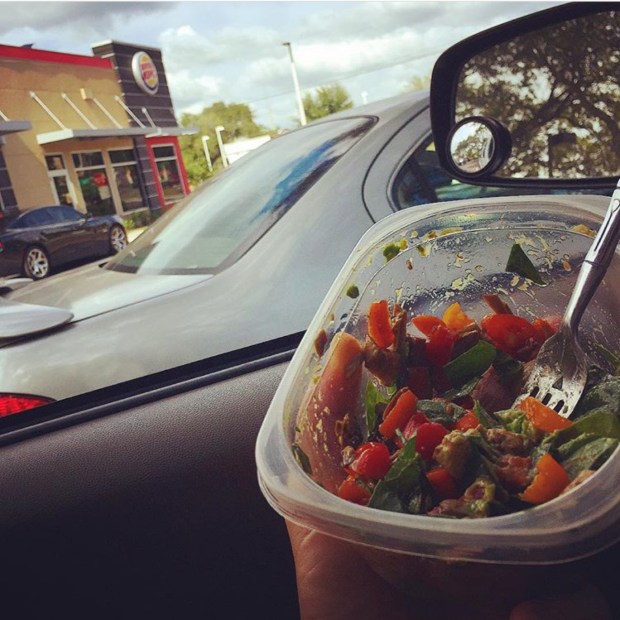
Whether it be in a salad I packed for lunch or Shannon’s delicious Saucy Tomato Eggs (clink link for recipe), bell peppers frequently make their way into many of our meals. Unlike their spicy cousins, bell peppers do not contain capsaicin, which is why they’re often referred to as sweet peppers. True to their name, bell peppers provide a sweet flavor and a tremendous crunch to any recipe. Even though they lack the beneficial capsaicin compound, bell peppers provide a host of beneficial nutrients that can help manage several different health conditions, including poor eye sight.

One medium sized red bell pepper contains approximately 75% of our recommended daily value of vitamin A. Research has shown that the vitamin A contained in vegetables like bell peppers not only protects the surface of the eye, but also decreases the inflammation created by specific eye conditions (source). In addition to vitamin A, bell peppers also contain high levels of the antioxidants lutein and zeaxanthin, which have been shown to be effective in the treatment of age-related vision loss (source). Believe it or not, the bell pepper’s health benefits don’t stop there.

Menu pic 5-18

Bell peppers also contain a significant amount of vitamin C, vitamin B6, folate and numerous antioxidants. This nutrient dense fruit/veggie improves immunity, reduces inflammation, promotes healthy pregnancies and stimulates collagen production. It’s important to remember that a lot of the vitamins bell peppers possess are fat soluble vitamins. Which means you need to prepare them with a fat source. Sauteing them up in olive oil or butter should do the trick (source).

I know I included the link already, but do yourself a favor and check out Shannon’s saucy tomato eggs recipe. If I had to pick only one meal that contained bell peppers to eat for the rest of my life, it would be that one.

No doubt about it.

If you have a recipe that features bell peppers that you can’t live without, please let me know about it. You can email your recipes to elementaltampa@gmail.com or post a pic of your favorite bell pepper recipe on one of our various social media channels. It’s going to be hard to beat Shannon’s recipe, but you can try.

What’s on the Menu – Grass vs. Grain

Today’s menu spotlight will focus on the nutritional differences of grass fed and grain fed beef. Before I get into the nutritional research I gathered, I want to quickly touch on the environmental & animal welfare aspects of both types of beef. Even though the production of both types of cattle can vary widely based on current regulations, I feel comfortable stating a few generalities about both. Grain fed cattle tend to live the duration of their lives in indoor feed lots and consume grain products like corn and soy. Grass fed cattle live the majority of their lives in pastures feeding on the grass available to them. Based on these points, the lives of grass fed cattle are more similar to that of their wild ancestors than grain fed cattle.

I want to reiterate that these are generalities. The USDA has not yet set a standard that all grass fed beef producers must follow (hear more about that here), which means the conditions grass fed cattle are subjected to can vary from one producer to the next.  If you choose to buy grass fed beef, research the producer. The more you know about the beef your buying, the better. Alright, on to the nutritional comparison.

Screenshot 2017-05-11 at 12.46.33 PM

Image courtesy of American Grassfed Association (link)

Can food and environment actually affect the nutrient composition of a species? You bet it can!

A 2010 study determined that grass fed beef can have up to 5 times more omega 3 fatty acids than grain fed beef. This is important because omega 3’s reduce inflammation and lower the chance of us acquiring insidious health conditions like heart disease and dementia (source).

In addition to fatty acids, grass fed also contains a different saturated fat composition than grain fed. While the amount of saturated fat in both types of beef is relatively similar, grass fed contains a higher proportion of stearic acid than grain fed. This component of saturated fat has been determined NOT to raise blood cholesterol levels, meaning that grass fed can have less of an effect on your cholesterol than grain fed (source).

Grass fed also contains more vitamin E and beta-carotene than grain fed. Our body uses these nutrients to help prevent the production of free radicals, which have the ability to create damaging health conditions like arthritis and cancer. These particular antioxidants also work together to prevent nutrient degradation during the beef’s journey from farm to table (source).

Menu pic 5-11

Even though I’m a big grass fed cheerleader, weird visual, both types of beef are highly nutritious in regards to macronutrients. Three ounces of 85/15 (lean meat to fat ratio) ground beef contains 13g of fat, 22g of protein and no carbs. But when you factor in the environmental impact and animal welfare differences, along with its micronutrient superiority, spending a extra cash on grass fed seems like a no brainer. Plus, your purchases can help revitalize the small farm industry, which I believe is key to changing our current industrialized food system.

I know cost is one reason why people choose not to buy grass fed beef, but I’d like to hear if there are any other reasons. Feel free to send us an email at elementaltampa@gmail.com or contact us on social media.

All you grass fed lovers can hit us up too! Send us a pic of your favorite meal featuring grass fed beef. We’d also love to see pics of the local farm you pick up your beef from.

Addicted to Fitness Show Notes – Unicorn Food: Starbucks didn’t start the trend

Shannon here. I’m finally back this week bringing you the show notes for our newest, and certainly one of our more trendy episodes. This week we jumped on the trend of unicorn foods. But before we get into the multi-colored fun, we tackle a quick recap of the week’s training.

I proudly hit my modified training goals – 4 training days a week including 3 days on the Peloton cycle and a HIIT workout that focuses on legs, butt and back. Sometimes it’s the little victories that make your week.

I’ve also started sharing some of my yoga learnings and leading Nick through yoga training, starting with basic vinyasa flows focusing on proper alignment. We even quickly chatted about areas of yoga that I’m most interested in.

Nick had his first appointment with his new functional medicine doctor. No worries, there were no particular issues that inspired it, but rather a general search for knowledge about what was going on in his body.

Functional medicine is focused treating underlying causes of symptoms, not just the symptoms themselves. Nick’s doctor was very thorough in their initial appointment, even commenting on his low heart rate and making some… interesting samples requests. Chances are we’ll be talking about the results on an upcoming episode!

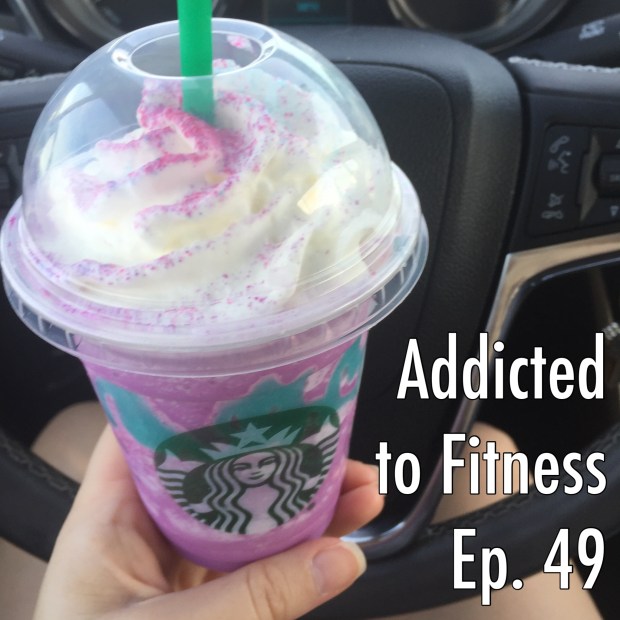
Now, onto the trendy talk – unicorn foods. The mystical food trend around rainbow colored foods that started on Instagram and has spread to brands across the world. Most recently, Starbucks jumped on the swirly color food item and they debuted a rather controversial product – the Unicorn Frappuccino.

Pictures of the concoction – pink and blue swirls of sugary blended ice complete with sprinkle topped whipped cream – appeared all over with a note that it would only be available for a limited time, so of course I had to pick one up for coworkers and I to sample.

Nick was not so inclined to try it and took a very adverse position to the whole thing, somewhat outraged that a ridiculous cup of sugary iced syrup could get so much attention. Nick even quoted a line from his man crush, Anthony Bourdain about his hate for Starbucks’ Unicorn Frappuccino.

Granted he was fairly unaware of the whole unicorn food trend anyways. It wasn’t until I reminded him of the viral sensation that was the Squatty Potty video in which an animated unicorn pooped out rainbow soft serve.

So where’s the health/fitness hook, right? Well, we dive into the nutrition facts of this particular item and it rocks some particularly lengthy amounts of flavorings and sugar. And amidst the laundry list of ingredients, Nick was most scandalized that there was NO COFFEE IN IT at all. There was a scary combination of fat (16g) and sugar (58g) in a grande (medium) though.

The most shocking part? The Unicorn Frappuccino is not the worst offender on their menu. Most of the frappuccinos are just as bad on the nutrition side. This led us to talking about how Starbucks, which has quickly jumped in to compete with fast-food restaurants, doesn’t always boast the best food options. It’s really just the straight coffee that isn’t too terrible.

In the end, the responsibility of keeping a healthy balance comes down to us (the customers) making the right decisions. So be sure you take a peak at what’s in your food and try to keep a good balance if you partake in even the trendy foods.

Finally, we recapped some of the listener responses from our previous episode – when do you listen to the podcast – and the most common response seems to be while commuting. So thank you to EVERYONE who is listening, whenever and wherever.

Podcast pic 5-1

This week, let us know if you’re a trendy food or just unicorn food lover!

As always please send any and all feedback to elementaltampa@gmail.com or drop us a line on social media. Have a healthy and balanced week!

Links to this week’s episodes:

iTunes: https://itunes.apple.com/us/podcast/unicorn-food-starbucks-didnt-start-the-trend/id1121420986?i=1000384951994&mt=2

Android: http://subscribeonandroid.com/addictedtofitness.libsyn.com/rss

Website: http://addictedtofitness.libsyn.com/unicorn-food-starbucks-arent-the-only-offenders

What’s on the Menu – Not So Sweet Potato

I really think the sweet potato should thank the Paleo movement for its recent rise in popularity. I grew up on a farm and the only time I recall seeing and/or eating sweet potatoes was in pie form at Thanksgiving. But then the paleo diet started to gain popularity in the early 2000s and BOOM! Sweet potatoes were in vogue.

I should mention that there is some debate amongst paleo diet followers if sweet potatoes are “paleo” or not. Regardless, I think sweet potato farmers should thank Robb Wolf and Dr. Loren Cordain for the 80% increase in consumption of their product in the U.S. between 2000 – 2014 (source). Shannon and I have certainly done our part to contribute to that increase as sweet potatoes frequently make their way into our weekly meal plans, and why not! They provide significant amounts of essential nutrients like fiber, vitamin C & B6 and manganese. They also provide more of the antioxidant beta-carotene than any other whole food on the planet (source). But what about their sugar content? Well, the actual truth of their sweetness may surprise you.

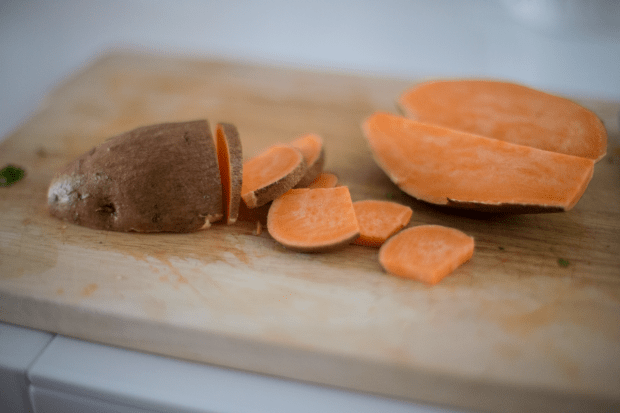
pexels-photo-89247

The glycemic index (GI) & glycemic load (GL) chart is a good tool to use when you’re trying to determine your body’s blood sugar & insulin response to certain foods (click here to see chart).  If you check out the chart you’ll see that sweet potatoes have a lower GI and GL than russet potatoes. If you’re trying to maintain a strict diet that contains only low GI & GL foods, a baked sweet potato may not be an option. Luckily there is a certain way to prepare sweet potatoes that will significantly lower their GI & GL.

While a baked sweet potato contains a relatively high GL of 22, a boiled sweet potato contains a GL of only 11 (source). This is great news! Wanna know why? Because in order to absorb more of those awesome nutrients contained in the sweet potato, you need to add fat to them. See where I’m going with this? That’s right, mashed sweet potatoes with butter and heavy cream may be the healthiest way to enjoy this multipurpose starch. You can also toss the steamed sweet potatoes in olive oil if you’re lactose intolerant.

Sweet potato pic

Sweet Tater Chips – One of my fav preparation methods

Above you’ll see a pic of my sweet potato “chips” before they head into the oven. No, they’re not exactly low carb, but they are covered in butter and olive oil. If you’re interested in indulging in these every once in a while, you’ll need a stainless steel vegetable slicer to CAREFULLY cut the sweet potato nice and thin. Coat them and a foil lined baking sheet in butter and/or olive oil and bake them at 400 degrees for approximately 15 minutes. Take’em out, flip’em, and cook for another 10-15 minutes. You can broil them for a few minutes at the end if you want to crisp them up.

Now that I’ve share one of my favorite sweet potato recipes, it’s time for you to return the favor. Feel free to send your recipes, complete with pictures, to us on Facebook, Instagram or Twitter. You can also email them to us at elementaltampa@gmail.com. We appreciate all feedback, especially the tasty kind.

Addicted to Fitness Show Notes – Fat + Coffee Taste Test

We kick off this week’s Addicted to Fitness discussing our training accomplishments for the week. Shannon is working towards logging 3 Peloton rides per week and is starting to perform more exercises to improve strength & endurance in her legs, butt and lower back. I on the other hand am focusing on building strength & mobility in my upper back with daily workouts at Tampa Strength, and increasing my run training. I love long distance running which is like nails on a chalkboard to Shannon who prefers long rides on her bike. This fact promted her to remind me that she kicked my butt in the bike portion of the sprint triathlon we did together back in 2011.

Screenshot 2017-04-09 at 8.09.21 PM

Post triathlon selfie of Shannon and I

After our training recap, Shannon and I launch into the main portion of this week’s podcast, which was inspired by a listener’s request. One of our favorite listeners, Lindsey, asked if we had any knowledge of the health benefits of the fat + coffee mixture known as “bulletproof coffee”. We’ve actually discussed the idea of fat + coffee in several episodes of the podcast (episodes #3, #8, #39) but we figured why not do a taste test of multiple types of these beverages. You don’t have to twist my arm to get me to drink coffee, especially ones that have my preferred macronutrient.

Bulletproof coffee was made popular by Dave Asprey, who claimed that a combination of high quality coffee blended with healthy fats, grassfed butter and MCT (medium chain triglycerides) oil, can act as a meal replacement and provide several other health benefits. Believers of fatten coffee claim that it provides immediate sustained energy, improves metal acuity, kickstarts your metabolism and puts you into fat burning mode (source). I’ve been drinking fatten coffee for sometime now and I can attest that I’ve experienced some of these supposed benefits, but I often vary my recipe. Shannon and I decided to taste test 4 different fattened coffee recipes:

  • Coffee + 2 tbsp Heavy Whipping Cream = 100 calories & 12g fat
  • Coffee + 1 tbsp Coconut Cream + 1 tbsp Coconut Oil = 165 calories, 18g fat, <1g sugar
  • Coffee + 1 tbsp Butter = 100 calories & 12g fat
  • Coffee + 1 tbsp Omega Power Creamer (Ghee, Coconut Oil, MCT oil) = 120 calories, 14g fat

I’ve been drinking the coconut cream & oil version for sometime and it is my go-to not only because of the taste (like a coffee & a pina colada had a baby according to Shannon) but because it helps me minimize the amount of dairy I ingest on a daily basis. Shannon actually enjoyed the butter version the most because of the non-oily mouth feel and it’s latte-like characteristics.

Coffee taste test pic

Fatten coffee works well for me because I feel that I function better running on fats opposed to carbs. If you’d like to become “fat fueled” this morning coffee concoction may be for you, but I do want to warn potential fatten coffee drinkers that regularly combining it with a high carb breakfast could lead to potential health problems (click here for article on other potential health problems associated with bulletproof coffee). I want to convey that you should always consult a physician or certified dietician before making any major additions to your diet, but please feel free to continue to send us podcast topics for future episodes.

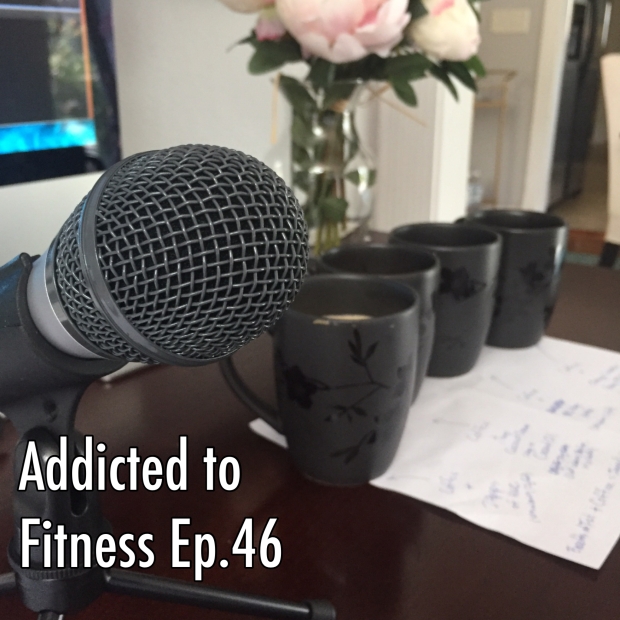
Podcast pic 4-10

You listeners helped us set our download record in March and we’re on pace to set another record in April. Please keep listening, sharing and sending us feedback on how we can make Addicted to Fitness the best health & fitness podcast available. If you promise to keep helping us spread the good word of fitness, we promise to keep churning out interviews, product reviews, taste tests, and everything else you’ve come to enjoy about the podcast. Keep sharing and stay healthy this week peeps!

Links to this week’s episode

iTunes: https://itunes.apple.com/us/podcast/fat-coffee-taste-test/id1121420986?i=1000384200765&mt=2

Android: http://subscribeonandroid.com/addictedtofitness.libsyn.com/rss

Website: http://addictedtofitness.libsyn.com/fat-coffee-taste-test

Addicted to Fitness Show Notes – Exercise & Diet: When, what and why

Shannon and I have fallen into a pretty good rhythm of recording the podcast on weekends, which use to have a lot less obligations than our weekdays. However, the script has flipped on us recently, and it seems we’re more busier than ever on the weekends. Which is why this week’s episode was recorded late into the evening hours on a school night. With that said, I think working outside our comfort zone led to one of the most entertaining Addicted to Fitness episodes yet.

We kick off this week’s podcast discussing Shannon’s upcoming yoga teacher training weekend. Yep, it’s that time again. We quickly transition into my current personal training schedule at my new home gym, Tampa Strength (link). My first client at the new location is taking advantage of my early morning training sessions and I’m about to start an early morning running program for a longtime ETT client. Discussing these morning training sessions segue nicely into the first main topic of this week’s episode: morning exercise.

Screen Shot 2017-03-13 at 5.07.41 AM

Click here to learn how you can train with ETT

Both Shannon and I prefer morning workouts. We both feel that completing a workout first thing in the morning sets you up for success for the rest of your day.  Shannon also believes that morning exercise helps you make better dietary choices throughout the day. Which is an interesting assumption because according to a recent Shape.com article discussing the benefits of morning exercise, she’s right. The article (link) uses research published in peer reviewed journals and other credible sources to explain how morning exercise can help you lower your blood pressure, get better sleep, burn more fat, and prevent chronic conditions like type 2 diabetes. The next topic we broach in this episode offers some of the same benefits as morning exercise, but it has more to do with what you eat. Actually, it has more to do with when you eat.

Screen Shot 2017-03-13 at 5.14.03 AM

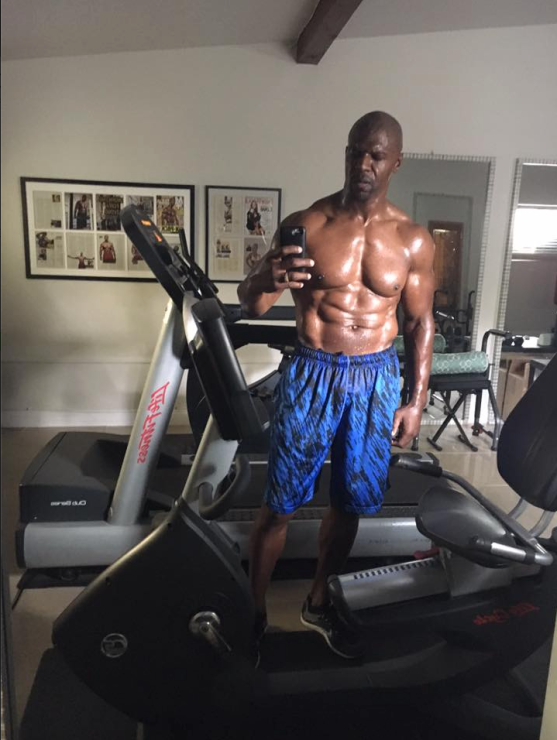
Photo courtesy of Terry Crews’ Facebook page

This week, my buddy Dan Greene, who happens to be owner of TUFMED, posted a video of the actor Terry Crews explaining his approach to nutrition. In the video (link), Crews explains that he uses intermittent fasting to help his body function optimally. He states that during his 16 hour daily fasting period, his body is undergoing autophagy, which is essentially your body recycling old and possibly damaging cells. Seeing this video was extremely coincidential because I’ve also been trying intermittent fasting as of late and have really had some positive results. Most obvious to me is that I’m not nearly as hungry as often and I don’t feel the need to indulge in not so healthy food items. Those “not so healthy” food items is what we dive into next, and this topic brings on a rant from me in which I call out one of the most powerful people in all media.

When I talk about “not so healthy” food items, I’m really talking about pro-inflammatory foods. Inflammation occurs when the body sends out white bloods cells to protect itself from foreign invaders like bacteria or viruses. However, ingesting certain foods can also create an inflammation response. Pro-inflammatory foods include sugar added beverages, refined carbohydrates and fried foods to name a few (link). A more extensive list of pro-inflammatory foods can be found on another website (link), which as you can tell when you listen to this episode, got me really miffed. I’m not going to go into too many specifics but I’m pretty sure I’m on the “DO NOT INVITE” list for the Oprah Winfrey Show. I KNOW YOU LOVE CHIPS OPRAH, THAT’S THE PROBLEM. Sorry, sorry.

Podcast pic 3-13

Nothing like a good rant to end another episode of the Addicted to Fitness podcast. We always enjoy producing these episodes for you and we really hope that you enjoy listening to them. If you do, please let us know by giving us a rating or review in iTunes (link), or by sharing the podcast with a friend (just text them one of the links below 🙏). As Shannon always says “sharing is caring!” We care about you all and we hope you stay healthy this week peeps!

Links to this week’s episode

iTunes: https://itunes.apple.com/us/podcast/exercise-diet-when-what-and-why/id1121420986?i=1000382543350&mt=2

Android: http://subscribeonandroid.com/addictedtofitness.libsyn.com/rss

Website: http://addictedtofitness.libsyn.com/exercise-diet-when-what-and-why

What’s on the Menu – Office Friendly Seafood Snack

I claimed in the title, and on Instagram, that this week’s menu spotlight can be an exception to the “no fish” rule that most office lunchrooms advertise. I make that claim for two reasons: smoked salmon does not have to be warmed up in the microwave to be enjoyed and I’ve never worked in an office before. Which is why you should take my office friendly claim for smoked salmon with certain level of skepticism.

One thing I can tell you with the utmost certainty is that smoked salmon is a FANTASTIC healthy snack food. Two ounces of wild caught sockeye smoked salmon from Trader Joe’s contains 6g of fat, 12g of protein and zero carbs. I always harp on the fact that you should try to eat foods that provide a significant amount of protein and/or fat because they’ll keep you fuller longer, which will prevent you from forging for snacks during the day. Not only does smoked salmon provide both those macronutrients, but the fat contained in smoked salmon is not only healthy, it’s essential.

kodiak-brown-bear-2042153_1280

This bear knows whats up

Essential nutrients are nutrients that are body is incapable of producing on its own, which means we must obtain them through diet or supplementation. One such essential nutrient that all types of salmon (fresh, smoked, canned, etc.) is high in is omega 3 fatty acids. Research has shown that consuming omega 3 fatty acids on regular basis has been linked to decreased inflammation, lowered blood pressure and improved function of the cells that line your arteries (source). These benefits are uber important since according to the World Health Organization (WHO), the leading cause of death worldwide for last 15 years has been heart disease. Can you see why I’m such a fan?!

Let’s review: Salmon, specifically smoked salmon, doesn’t have a pungent fishy smell, IMO; it contains a significant amount of protein, which will help prevent additional snacking; it contains omega 3 fatty acids, which can help you avoid the #1 leading cause of death worldwide! The only problem I see is that a 4 oz package cost almost $9. But honestly, it’s a fair price to pay for a food that is packed with life saving nutrients.

I can eat it straight from the package but I know lots of people love adding some cream cheese and capers (yes, I purposely left out the bagel). Let us know how you enjoy your smoked salmon. We’d also love know what “nutritional powerhouse” foods you snack on. Leave your feedback in the comment section below and hit us up at elementaltampa@gmail.com.

smoked-salmon