diet

What’s on the Menu – Cauliflower: The Veggie Drawer’s Utility Player

If you all are anything like me, you knew when your mom or dad was cooking cauliflower for dinner. Hell, you could probably smell it before you even walked in the house. In today’s post, we’re going to go over several reasons why you should eat cauliflower, but I get why kids don’t exactly go crazy when they see it on the dinner table. The smell, the stark white appearance and the overall bland flavor would turn off any 8 year old. The beauty of this “blank canvas” of a veggie is in its versatility and the fact that it is a nutritional “powerhouse“.

cauliflower-1465732_1920

Cauliflower belongs to the cruciferous vegetable family, which includes other highly nutritious veggies like kale, broccoli and turnips. One cup of cauliflower contains 5g of carbs with over half of those carbs coming from fiber. The phytonutrients contained in cauliflower include a significant amount of Vitamin C, K and folate. It also contains an organic compound known as glucosinolates, which when broken down during the cooking process produces cauliflower’s less than appetizing smell, but also produces several other compounds that have been found to have anti-cancer, anti-inflammatory and anti-oxidative effects (source).

screen-shot-2017-02-01-at-6-12-41-pm

You know me, I’ll sacrifice taste for a nutritional payoff (e.g. sardines). Luckily, cauliflower is so adaptable that you can use it to make some of your favorite carby side dishes. Instead of white rice, try riced cauliflower (pictured above). Instead of tater tots, try cauliflower tots. Instead of a wheat based pizza crust, try a cauliflower pizza crust. Yes that’s a real thing! Former guest of the Addicted to Fitness podcast Anna Vocino has an awesome cauliflower pizza crust recipe on here website. Give her recipe a shot and let me know how it comes out. We’d love to see pictures of how you dress up your cauliflower.
What’s on the Menu – The Other Red Meat

If you’ve been paying attention to my weekly menu spotlights, you’ve probably realized that I don’t discriminate when it comes to food. Well, that’s not entirely true. I do my best to stay away from anything that contains refined sugars and grains, but other than that I’m an omnivore through and through. I say that because last week’s post and today’s post feature foods that are not exactly vegan friendly. I want my vegan friends to know that I’m not discriminating against you all. Shannon is a former vegan and she still makes some delicious vegan dishes and I promise to feature one in an upcoming post. But today’s post is dedicated to very special type of red meat.

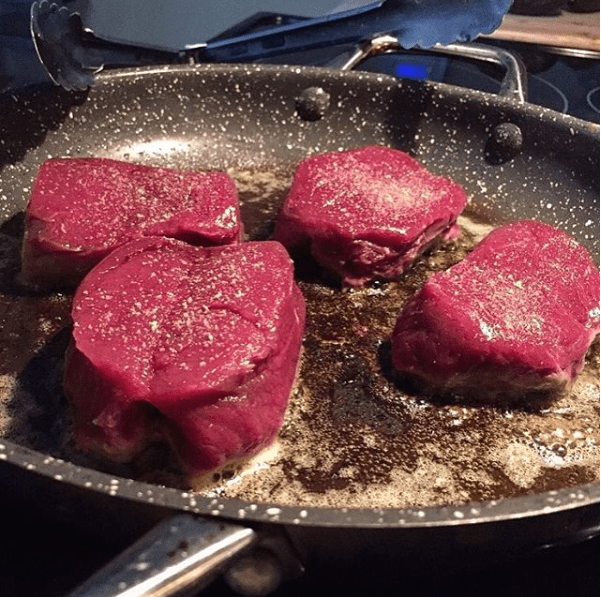
The steaks featured below can’t be found in the grocery store. They don’t come from any factory farms or feedlots. They come from the fields, woods, and prairies. These are steaks from a whitetail deer. Deer meat, better known as venison, along with other wild game meat tend to have lower caloric and fat content but equal amounts of protein compared to meat from conventionally raised livestock. Venison in particular has approximately 150 calories, 24 g of protein and 1.5 g of fat per 3.5 ounce serving (source). Any regular readers of the blog will know that I am not afraid of fat so the idea of the meat having less fat doesn’t exactly thrill me, but venison and other wild game have a better ratio of omega 6 to omega 3 fatty acids, which researchers have found could help mitigate certain chronic diseases/conditions (source). Eating wild game like venison not only provides nutritional benefits, it also allows you to be less reliant on factory farmed meat.

screen-shot-2017-01-25-at-5-47-05-pm

Legit wild game is not regulated by the USDA, which means it cannot be sold in supermarkets. I believe this is a good thing because it inspires people to take up hunting or in most instances, connect with a friend or family member that does hunt. Having grown up in a hunting family, I can tell you from experience that hunters are extremely generous when it comes to sharing their harvest. Take these folks up on their generosity because the less reliant we are on meat from factory farms, the better off we, and the planet, will be.

If you already eat wild game on a regular basis, let us know what your favorite type and preparation method is. Feel free to contact us elementaltampa@gmail.com with any recipes.

What’s on the Menu – An Egg-squisite meal

Shannon’s saucy tomato eggs dish is one of my favorite brunch options. I mean favorite of all time!  I prefer it over 90% of the stuff I can order at my favorite brunch restaurant. What’s not to like? Fresh herbs & veggies – good. Italian sausage – good. Eggs – GOOOOOD!!! The combination of ingredients creates an absolute flavor explosion, but I’d be remiss if I didn’t mention my favorite part of this dish. I’m sure you’ve already figured out from the title of this post, that it’s really an homage to eggs.

screen-shot-2017-01-16-at-6-01-22-pm

Let’s be serious folks, eggs are the best whole food on the planet.

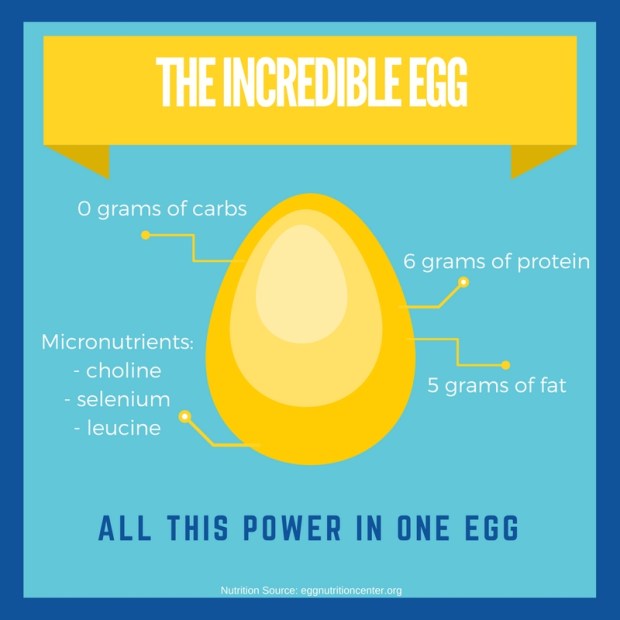
I know vegans will disagree but one egg provides 6g of protein, 5g of fat (1.5g saturated) and 0g of carbs. They also provide essential micronutrients like choline, selenium, and leucine, which is essential to the production of muscle protein (source).

egg-nutrition1

If the nutritional benefits aren’t enough, the number of ways you can prepare them is almost endless. I don’t want to go on a Bubba Gump-like rant, but you can enjoy eggs fried, poached, scrambled, basted, hard boiled and I’m sure there are preparation methods I don’t even know about.

Before I rest my case on eggs’ superiority, I should mention that all these facts are about WHOLE EGGS. If you have an egg allergy, I get ditching the yolk, but all of you who think you’re being healthier eating only egg whites, you are sadly mistaken. You’re missing out on the vast majority of the nutritional benefits due to outdated nutrition advice, most likely misinformation about cholesterol. I’d recommend checking out Ivor Cummins’ (aka “The Fat Emperor”) website and get educated on why you should be putting whole eggs back on your menu.*

If you’re interested in making some saucy tomato eggs at home, check out the recipe on Shannon’s site.

screen-shot-2017-01-16-at-6-01-52-pm

If you think you have an egg dish that can rival Shannon’s saucy tomato eggs, which is highly unlikely, send some pics or a recipe our way so we can check it out!

You can always leave us feedback either on Facebook or email us at elementaltampa@gmail.com.


*I’m not a certified dietician so you should seek a professional’s input if you have any specific health concerns regarding your diet.

What’s on the Menu – Butter is back!

We’ve been told for decades that this particular food item can be a major obstacle to losing weight and being healthy. I’m talking about the ingredient that is making the dish below glisten like a newly shined automobile.

buttered-salmon

That’s right I’m talking about BUTTER!

It seems back in the 1960’s, butter and other saturated fats (e.g. cream, coconut oil, lard) were labeled as unhealthy by our government. This was most likely due to some possibly-bias research provided by Ancel Keys. Keys and his Seven Country Study asserted that individuals that had a higher intake of saturated fat were more apt to develop heart disease. We’ve recently discovered that his research may have been swayed by the Sugar Association and that higher mortality rates were most likely due to the higher consumption of saturated fat in conjunction with sugar.

The debate of who’s right still rages on, but scientists and researchers like Dr. Mark Hyman, Nina Teicholz and Gary Taubes have discovered that saturated fat is not the villain, it was once painted to be.

Now, I don’t want anyone to think they should start eating sticks of butter like Homer Simpson or Paula Deen, but I think it’s safe to say you should feel comfortable to cook eggs, melt and drizzle on steamed veggies, or create a sauce for a delicious salmon dinner (like the one pictured above) using butter.

One tablespoon of butter contains 100 calories and 12 g of total fat (8 g saturated) with no carbs or protein. Not exactly a complete food, but the fat it provides is essential for the production of hormones, energy, and cell membranes (source).

Also, in a world of processed foods with mile-long ingredient lists, a quality butter has AT THE MOST 2 ingredients: cultured pasteurized cream and salt.

It’s important for me to state that I’m not a doctor. Shocked as you all may be, I would never recommend taking my dietary suggestions over those from a medical professional. However, I’m pretty confident that if Shannon, the chef for the meal above, made this dish for a medical professional, they’d agree that butter is BETTER!

We want to see the delicious dishes you’ve made with butter. Tag your photos on social with #ETTampa or leave comments below on how you’ve ditched manufactured vegetable oils for the real thing.

What’s on the Menu

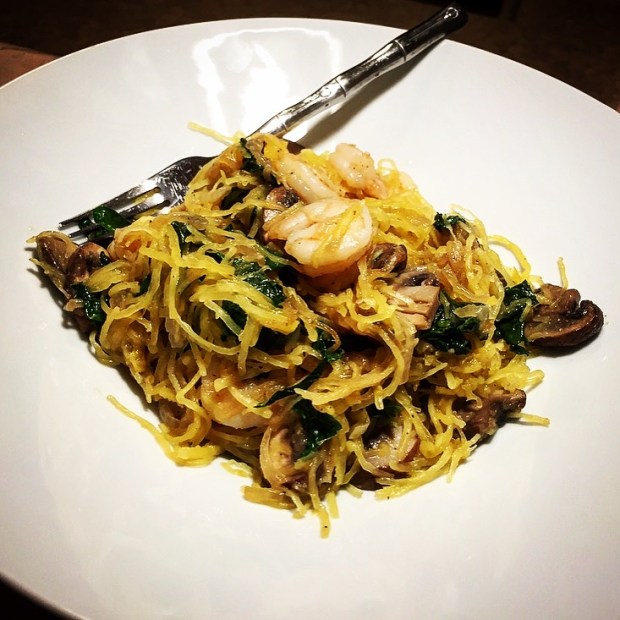
This week’s menu highlight features another one of my wife’s awesome culinary creations. The dish below combines shrimp, spinach, mushrooms and spaghetti squash in an olive oil, butter sauce to produce a fantastic weekday dinner. Not only does this meal’s caloric breakdown match my desired macronutrient intake (60% fat, 25% carbs, 15% protein), the spaghetti squash produces far less of an insulin response than its similarly named refined carb doppelgänger. I’m not really into counting calories but if you are, spaghetti squash has 20 calories per cup compared to pasta’s 100. It also contains 24 less grams of carbohydrates than pasta and is full of important vitamins and minerals like vitamins C, B and folate (source). It may take a little longer to prepare than pasta, but the end product is much more flavorful and better for you. Even though these fruits, yes they’re fruits, are harvested in the fall, you can still get them at the grocery store into winter and early spring. Grab one on your next trip to the grocery store and send us some pics of your spaghetti squash creations.

How to prepare spaghetti squash

  • Preheat oven to 375 degrees
  • Cut spaghetti squash lengthwise
  • Scoop out seeds
  • Drizzle with cut side with olive oil & salt
  • Place cut side down on baking sheet
  • Cook for approximately 45 minutes

squash-pic

What’s on the Menu

If you’ve been following this blog for an extended period of time, you are probably privy to the fact that I’m a devout omnivore. That devotion is what inspires me to order the “charcuterie board” whenever I see it on a restaurant’s menu.

Meat and cheese may seem simple, but the variety of flavors that can exist within those two food categories appears to be endless. Which is why when Shannon asked me what we should have for a mid afternoon snack on Christmas I almost involuntarily responded, “charcuterie!”

I’ll admit right now that I had no idea that my request would result in the picture you see below.

whatsonthemenu-12-28

(Vegan Cheeze Dip in the top left corner)

As you can see the board contained a variety of meats and cheeses, but it also contained Shannon’s vegan cheeze dip. I know what you’re thinking “How the hell can cheese dip be vegan?” Fortunately, the answer to that question is ridiculously simple. Check out the recipe from her blog to see why:

INGREDIENTS:

  • 1 1/2 cup Raw Cashews
  • 2-3 Garlic Cloves
  • 1 1/2 cup Nutritional Yeast
  • 3/4 cup Water
  • 3 tbsp Fresh Lemon Juice
  • 1 tsp Dijon Mustard
  • 1 tsp Chili Powder
  • pinch of Cayenne Powder
  • pinch of Turmeric

DIRECTIONS:

Dump all the ingredients into a food processor and blend till creamy.

This recipe is perfect for everyone! It doesn’t contain any dairy, the cashews are full of healthy fats (source), the nutritional yeast has a surprising amount of protein (source) and the vast majority of its carbs come from fiber.

You make this dip for you next big party and I promise you’ll be having people asking you for the recipe. Just make sure you tell them you got it from elementaltampa.com!

What’s on the Menu

Spaghetti and meatballs. I feel like those two have been perpetually linked since the beginning of time, or since pasta has been a thing. Fortunately, we’ve discovered that meatballs don’t always need a refined carb counterpart. This week’s look into Shannon and I’s menu features turkey meatballs paired with garlic sautéed baby bok choy instead of pasta. Bok choy is a great pasta alternative because it’s a cruciferous vegetable that is loaded with vitamins A, K, and C and contains over 70 antioxidants, which is why some researchers believe it can aid in cancer prevention (source). Expanding our food choices, especially when it comes to vegetables, is crucial to optimizing our health and developing as a species (source). The next time you go grocery shopping, forget the box of barilla and go for the bok choy. If you are already a bok choy fan, let us know what dishes you incorporate it into. We’re always looking for new recipes.


What’s on the Menu

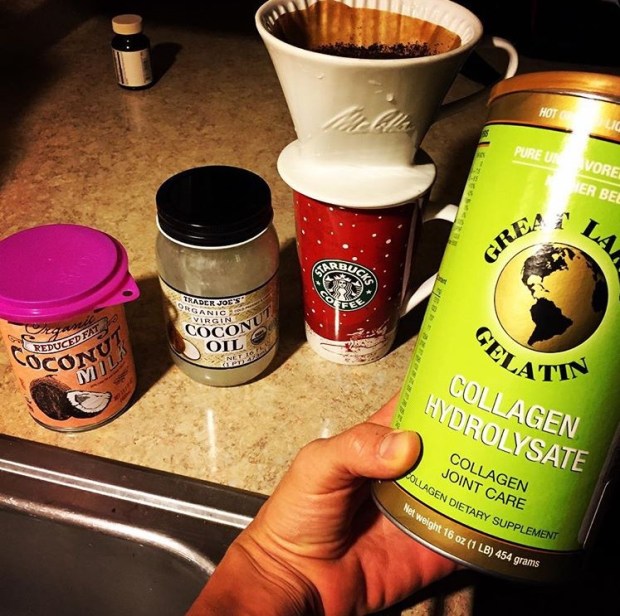
This week’s peak into my daily nutrition features my non-dairy version of bulletproof coffee. For those that aren’t familiar with bulletproof coffee, it’s essentially a mixture of coffee, MCT oil and grass fed butter that was made popular by Dave Asprey. The idea behind this concoction is that it keeps you satiated longer unlike many common breakfast foods (i.e. cereal, doughnuts, bagels). Also, some people say that the MCT oil, which is a source of energy itself, can prolong the caffeine effect of coffee. Either way, as someone that makes a conscious effort to get the majority of his calories from fat, this seems like a good idea, but I can’t handle that much dairy right when I get up. Which is why I was ecstatic when I learned about a non-dairy version of the upgraded coffee during our interview with Anna Vocino on the Addicted to Fitness podcast. I’ve been using this recipe almost every morning for the last 3 months and I’ve had no problems, and unlike bulletproof coffee, this recipe contains a significant amount of protein. Give it the once over and let me know if you prefer it over the traditional bulletproof coffee recipe. 

Recipe
1/3 cup of Trader Joe’s Reduced fat canned coconut milk (90 calories, 9g of fat, 1g of sugar)

1 tbsp of Trader Joe’s Coconut oil (120 calories, 14g of fat, 0g of sugar)

2 tbsp of Great Lakes Collagen Hydrolysate (45 calories, 11g of protein)

12 ounces of black coffee (>2 calories)

*Pour all ingredients in a blender or shaker bottle and combine till well mixed 

= 317 calories, 30 g of fat, 11 g of protein and 1g of sugar

coffee-concoction

Thanks to author Anna Vocino for providing this recipe