nutrition

Daily Fuel

A client of mine recently said I should post more pictures of my meals, so I figured why not start with a snapshot of what my fiancé and I bring to work every day. One of the keys things to remember about nutrition is that you want to eat food that’s nutrient dense. Nutrient dense foods contain higher levels of macronutrients (carbs, fats, protein) and micronutrients (vitamins & minerals) which minimizes the amount of “empty” calories. The more nutrient dense your food is, the more satiated you’ll feel after eating it. That’s why I always fill our lunches with veggies, fruit, nuts and protein sources containing healthy fats. We’re fortunate enough to be able to process dairy in the form of yogurt & cheese, but we make a conscious effort not to overdo it. We also try our best to limit our sugar sources to just fruit. What are you packing in your lunch? Do you bring enough food with you to be satiated throughout the day? Do you find yourself buying food while at work?

IMG_2788

Diversification isn’t just for your portfolio

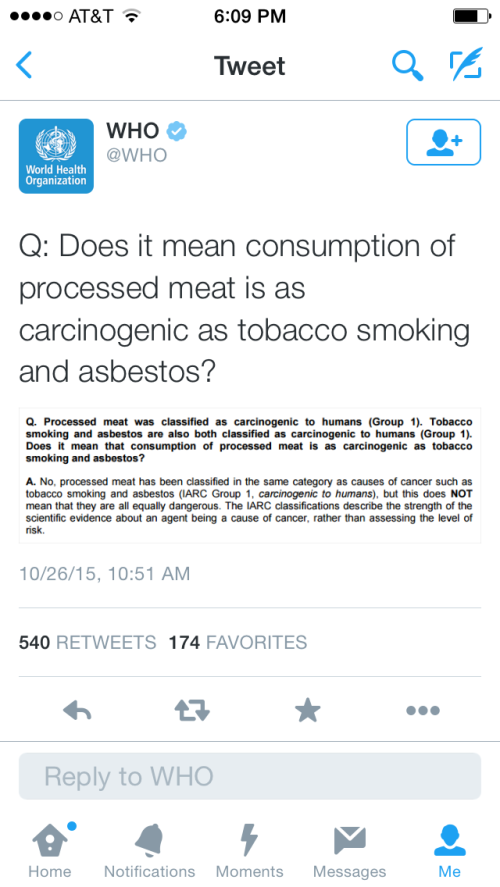
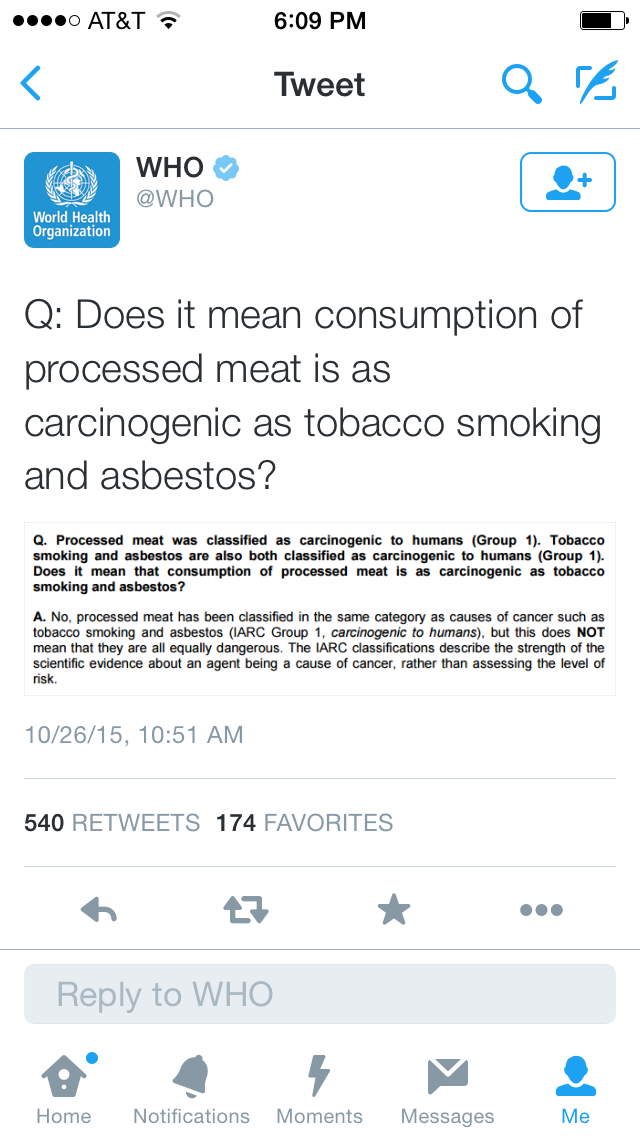
Yesterday, the World Health Organization (WHO) sent out a press release stating that processed meats are carcinogenic to humans and that red meat is probably carcinogenic to humans. Since I frequently mention my proclivity as an ominvore, I’m sure most of you think that this post will try to debunk the WHO’s findings. Well……surprise! I actually think the WHO’s findings are great! I believe nutrition is a very important issue, especially in the U.S., and informing individuals on the health effects of certain foods is extremely important. Also, I’m a big proponent of having diversity in one’s diet. If you read the press release, the WHO states that eating more than 50 grams of processed meats (approximately 2 slices of bacon) or 100 grams of red meat (approximately 1/4 lb burger) a DAY can increase the risk of certain types of cancer. It DOES NOT suggest that people should stop eating meat. In fact, the WHO states that “red meat has nutritional value” and that governments should use this information to educate their citizens on proper nutrition. The WHO press release DOES NOT say that processed & red meat are as carcinogenic as tobacco or asbestos, as some media outlets reported. Check out the screen grab below from the WHO’s Twitter page for a more in depth explanation of the classification.
IMG_1836

I am a meateater and will continue to eat meat. I will also continue to eat a diverse diet in order to limit my processed & red meat intake. Veggies, fruit, starches, nuts, seeds, poultry, dairy, the occasional adult beverage, seafood, and everything else in between. I believe all these foods along with processed & red meat have allowed humans to become the ultimate omnivores.image
I hope the WHO press release will motivate individuals who rely on processed & red meat as their primary protein source to diversify their diets. I know I’m only scratching the surface of this issue, but I wanted to clarify some misinformation, and further promote the positive side of the WHO’s findings. If you have any comments please leave them below.

Back to School ***UPDATED***

Original post published July 8th

Recently I’ve been researching a new certification to compliment my current personal training certification. Being certified in another fitness related discipline allows me to offer more services to my clients and it helps keep my current personal trainer certification up to date. Three certifications that I’ve been looking into are:

Fitness Nutrition
Kettlebell Instructor
Weight Loss specialist

Before I choose which one I’m going to pursue I wanted to get your opinion on what certification you would want your personal trainer to possess. Please feel free to suggest any training not listed above and/or not directly related to fitness (i.e. website development). Any feedback you can provide is greatly appreciated.

IMG_1059

Update

After a lot of research into my next fitness related certification, I’ve decided to go with the Fitness Nutrition Specialization offered by NASM. I chose this certification because it will provide me with a better understanding of how nutrition affects my clients’ quest to lead a healthier life. This certification will educate me on nutrition topics such as micro & macronutrients, caloric needs, metabolism, portion size, interpreting food labels, and many more. I won’t be able create meal plans to meet specific dietary needs, but I will be more prepared to answer “How much protein should I eat throughout the day?” or “What’s the best food to eat before and after a workout?”

IMG_1347

The recipe for healthier life consists oh two primary ingredients: diet and exercise. Generally speaking, if you make the right decisions on how to treat your body, and what to put into your body, it will reward you by functioning like a well oiled machine. My goal as a personal trainer is to provide people with the tools they need to make their “machine” as efficient as possible. In order to do so, I need to continue to educate myself on the latest information regarding diet and exercise, and the Fitness Nutrition Specialization just happens to be the next chapter in my curriculum.

It’s Much More than the Best Part of Waking Up

Caffeine is one of the world’s most popular supplements and most of us ingest it during our morning cup of coffee. However, studies suggest that the best time to drink your daily coffee may be before you perform your daily workout. The benefits of drinking coffee before your workout include improved circulation and reduced muscle soreness. Check out the entire list of benefits coffee can provide as a pre-workout drink and how NOT to indulge in too much of a good thing.

restaurant-red-beans-coffee

Make Macho Man Proud

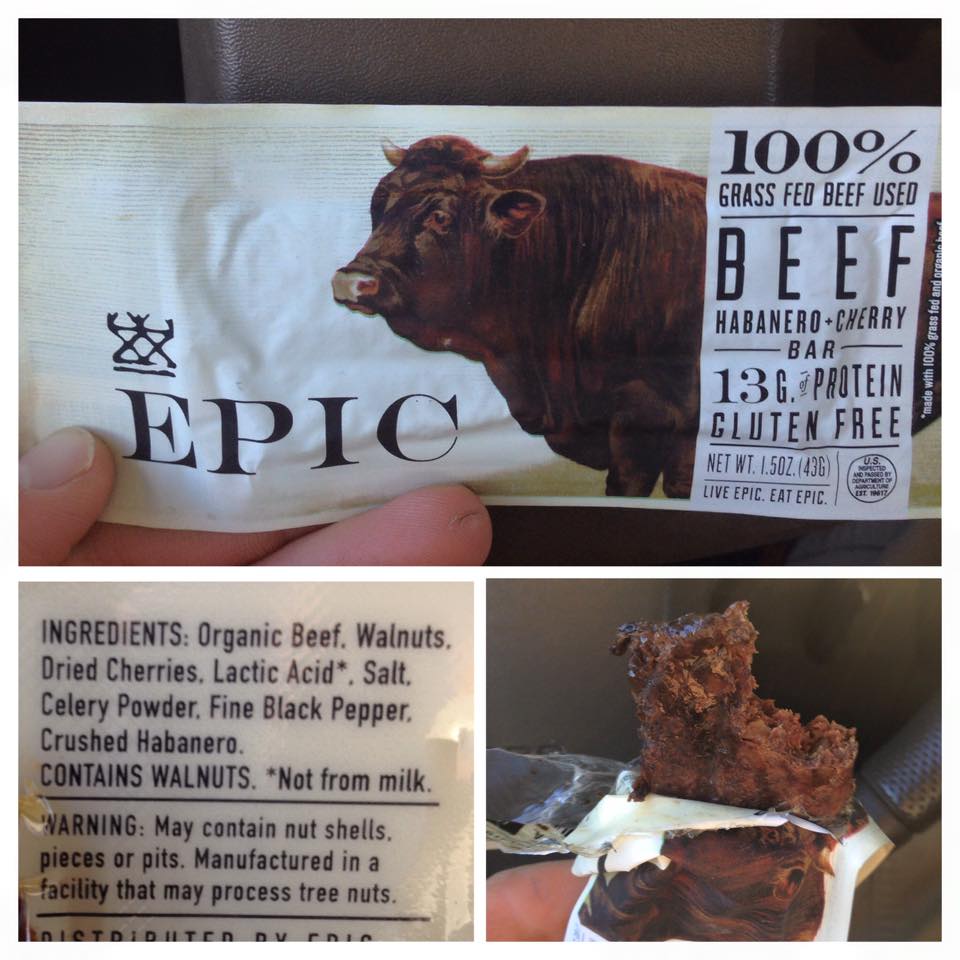
You all know that I’m always looking for new sources of protein to add to my daily meal plan. Also, I am really trying to minimize processed ingredients in the food I eat. That is why I was really excited when I picked up the EPIC 100% grass-fed beef bar at Whole Foods recently . I don’t think it will replace my daily protein bar due to the price tag (almost $3) but the taste, ingredients, and protein content will make me buy more in the future. The Epic bar makes slim jims look even more unappetizing than they already are.

10929001_1590682937832219_4090328105949856690_n

Too Good to be True

In December, I wrote a post on the ETT Facebook page about the article “Tilapia is worse than Bacon” from eatthis.com. After reading the article, I suggested to followers of the ETT FB page that they avoid farmed raised tilapia and spend their hard-earned dough on quality seafood at the supermarket. Upon further review of several other articles, including one from Berkeley Wellness, it appears that farmed raised tilapia may NOT be as bad as eatthis.com made it out to be. Farmed raised tilapia contains much less omega 3 fatty acids than say wild caught salmon or wild caught tilapia for that matter, but it is still a great source of protein (26 g in a 3.5 oz serving). Also, tilapia farms in the U.S., Canada, and even Central America use sustainable aquaculture practices (which are certified by a third party) unlike some of the Asian farms highlighted in the eatthis.com article, which means you don’t have to worry about dining on a fish that may have been dining on animal waste. The eatthis.com article contains factual data but it appears they may have slanted their reporting of the facts in order to entice bacon lovers like myself. Check out both articles and let know if you plan on purchasing farm raised tilapia the next time you visit the supermarket. Now if you’ll excuse me, I have to go call my mother and tell her it’s ok to buy tilapia again. . fish-market-marketplace-people-3713

Coffee Concoction

The paleo movement has given us many things. It has given us a reason to cook & eat bacon on a regular basis. It has revitalized the career of the sweet potato and has popularized the idea of making your coffee bulletproof.

Coffee that is impervious to bullets? Tell me more!

Bulletproof coffee is a coffee cocktail that claims to burn fat while providing more of an energetic boost with less of the crash associated with regular coffee. What is in this magical drink you ask? The three main ingredients are: high-quality coffee, grass-fed butter and MCT (medium-chain triglycerides) oil. That’s right. It’s coffee with butter and oil in it. I’m sure all the old school coffee drinkers have just stopped reading this post. The Lean Muscle Project analyzed the claims made by bulletproof coffee promoters and found some truly interesting results. They discovered that bulletproof coffee may provide more of a sustained energy boost than regular coffee. Also, it can help people lose weight by acting as a substitute for a calorie dense breakfast, but it will not miraculously burn fat. I personally have no problem with bulletproof coffee. Heck, I’m drinking a version of it right now! However, I do not use it to help me lose weight, I do not drink it every morning and I use a much smaller amount of butter and oil recommended by the bulletproof believers. The recommended recipe for bulletproof coffee can contain up to 52 grams of saturated fat in one cup which is more saturated fat than a 16 oz T-bone steak (cooked) and 5 whole avocados combined.

Hopefully I haven’t discouraged you from drinking bulletproof coffee. If you haven’t drank it yet, give it a try and let me know what you think. Also, if you drink it on a regular bases, I’d love to hear what benefits it provides you. Oh, almost forgot to mention that this product WILL NOT actually stop bullets, in case you were wondering.

FullSizeRender

Wildin’ Out

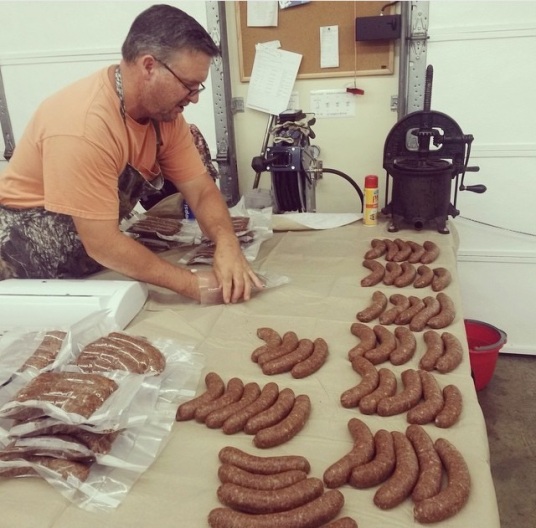
Last week, I limited myself to seafood & plant based sources of protein. During that time I discovered that lentils are a great source of protein and I’m happy to say that they are now a regular part of my diet. Removing land-based animal protein from my diet was relatively easy, but I prefer the variety I’m allowed in a non-discriminatory omnivore diet. However, the number and quality of protein choices at my local supermarket isn’t exactly impressive. That is why I was one happy camper when my parents visited last week and brought a cooler full of wild game meat with them. Several pounds of both venison sausage and Canadian Goose breast all obtained and processed at my family farm in Maryland. Not only is wild game meat generally more nutritious than commercially raised livestock, but possessing the knowledge of where that animal lived, what it eat, and who processed it makes wild game meat my preferred form of protein.

IMG_0372

Smoking/grilling homemade venison sausage