food

Addicted to Fitness Show Notes – Getting Enough Iron & Metabology Taste Test

Shannon here, bringing you some show notes from the recent episode.

Looking back on our training recap for the week I’m proud to say being pregnant hasn’t held me back from my training. In fact, I’ve been able to keep up with my training goals for the last 6 weeks, just scaled back. Gone are the days of high impact and even super high intensity, replaced with some more moderate plans. In addition, I’ve expanded my yoga practice to include prenatal yoga, which was eye opening, especially when it comes the pelvic floor exercises (oh so important).

Meanwhile, Nick has been trying to get in some strength training, though he admits he’s been slacking a bit in the last week. The majority of his work has been focused on kettlebells. He’s also been doing a 30-day “waist trainer” challenge with clients.

Next, we get into some recent doctor visits. At the recent St Pete Healthy Lifestyles health expo, put on by future podcast guest Mika Rotunda, Nick took advantage of a discounted consultation at local chiropractor office. He learned that he doesn’t have optimum movement in the upper spine (cervical and thoracic) and that he has a slight forward head position. Both Nick and I agreed that he should start getting regular massages, but in the meantime, he’s working on some mobility work at Tampa Strength.

Screen Shot 2017-06-26 at 5.36.28 AM

Image courtesy of appreciategoods.com

For my doctor visit, I had the joyous opportunity to do the glucose test for gestational diabetes. Thankfully my results came back negative.

I also had some bloodwork done and had my iron levels checked. Despite having had normal levels at the beginning of my pregnancy, it seems my iron levels have decreased since the baby is using more iron. Turns out pregnant women need twice the daily value (DV) of iron than non-pregnant women, about 30g per day. Now that I know, I’m being diligent about taking my prenatal vitamin and getting more iron from the food I’m eating.

In looking up those foods rich in iron, I learned there are two types – heme iron (from animal sources, attached to protein) and nonheme iron (plant sources, which don’t typically get absorbed as well).

The top 10 iron rich foods (via the Dr. Axe article)

  • Top 10 iron rich food; click on food to read more about their additional health benefits

Though we both were fairly informed about foods packed with iron, we both learned something new when it came to vitamins that help or inhibit the absorption of iron. Turns out Vitamin C is an iron “enabler” (hello, strawberries), but calcium (dairy) is an iron inhibitor. So, turns out what I pair my spinach salad with is extremely important!

Now on to the main meal… literally.

Metmeals

Learn more about the Metabology meal service at metabology.co

Despite the fact both Nick and I believe that cooking the majority of meals is a key component to eating clean, it’s a big commitment and a lot of time goes into it. At some points in your life, we all need something fast. However, the “fast food” industry is not the best option for a decent meal, especially as abuse of that food contributes to health epidemics like obesity and Type 2 Diabetes.

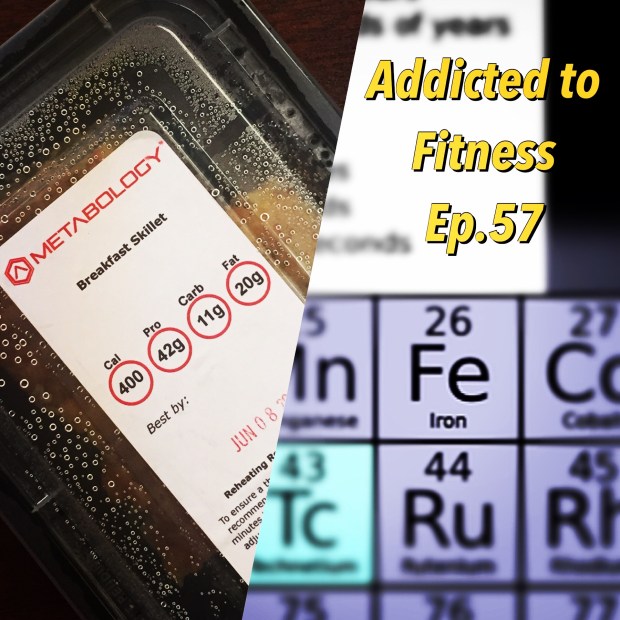
We had the opportunity to review Metabology meals, which is a food service that is available here in the Tampa Bay area.

We tried two meals, cooked by the German chefs that create the recipes, and we divided them up. Here’s a quick look at our taste test:

  • My meal – Breakfast Skillet
    • Plastic containers keep the food fresh and are microwave safe, coming complete with cooking instructions, macronutrient breakdown and a best by date
    • I missed that there was no ingredient list, but I took a guess at what was in my meal:  eggs, potatoes, green bean, yellow corn, sweet peppers, sausage, cheese, and herbs & spices. It also came with a small container of mild salsa
    • The overall taste was good, even after microwaving it, it wasn’t dried and had a nice little spice to it
    • Portion size was a bit big for me, and it took me a while to finish it, but it kept me full for over 3 hours
    • Overall rating: two thumbs up
  • Nick’s meal – Chipotle Chicken with Northeastern Veggie Medley with White Rice
    • We both found the container lids somewhat tough to get off, but it may be why the food stays so fresh
    • Chicken wasn’t rubbery after microwaving it and even the rice tasted fresh (not an easy feat for microwaved rice), which was a very pleasant surprise
    • The chipotle “sauce” on the chicken was tasty but not sure what it was made of
    • Meal kept him full for over 3 hours, which is especially rare for Nick
    • Overall rating: one and a half thumbs up

Our mutual conclusion was that the meals were good, but both Nick and I agreed that we’d like to get more information about their ingredient sourcing and preparation process.
Podcast pic 6-26

Knowing that meal prep takes time, TELL US, about you meal prep experience.

And don’t forget email elementaltampa@gmail.com to take advantage of the free fitness consultation we’re currently offering.

If you haven’t done so already and can nominate Addicted to Fitness for best local podcast in Creative Loafing’s 2017 Best of the Bay, please do so.

Links for this week’s episode

iTunes: https://itunes.apple.com/us/podcast/getting-enough-iron-metabology-taste-test/id1121420986?i=1000389089665&mt=2

Soundcloud: https://soundcloud.com/nick-burch-702220833/getting-enough-iron-metabology

Website: http://addictedtofitness.libsyn.com/getting-enough-iron-metabology-taste-test

What’s on the Menu – Get’em while their fresh

Today’s menu spotlight is asparagus, which is why I want to address the stinky elephant in the room right off the bat. Yes, most people experience some unpleasant odors when they visit the restroom after eating asparagus. The reason why is a chemical contained exclusively in asparagus known as asparagusic acid.

Clever name right?

When digested, this chemical produces foul-smelling sulfur-containing compounds. As unpleasant as this olfactory side effect may be, it pales in comparison to the health benefits eating asparagus can provide (source).

Asparagus is full of healthy micronutrients but the one that is most prominent is vitamin K. One cup of asparagus contains over 100% of our daily value (DV) for vitamin K. This vitamin is essentially necessary for blood clotting. Studies have also found that the vitamin K in asparagus could help increase bone density, while decrease fracture rates among individuals with osteoporosis (source). The health benefits of vitamin K are extremely important, but asparagus contains a large amount of a another nutrient that I’m much more interested in, especially at this point in my life.

pexels-photo-416594

The day this blog is posted, my wife Shannon will be 27 weeks pregnant. Anyone that has gone through this process knows that proper nutrition is a HUGE part of a healthy pregnancy. One component of pregnancy nutrition is making sure the woman receives an adequate amount of certain nutrients. Folate happens to be one of those nutrients and asparagus contains over 60% of our DV per cup. Folate aids in several functions critical to a developing fetus like preventing neural-tube defects, red blood cell formation and DNA construction (source).

Which is why it’s safe to assume that I’ve been essentially force feeding Shannon anything high in folate over the last six months. We’ll have to cross asparagus off that list soon because its peak growing season has nearly ended and freshness definitely affects the plant’s nutrient density.

Asparagus is a spring time crop. Yes you can buy canned and frozen asparagus year round, but the plant’s biology drastically reduces its available nutrients once it’s harvested. You may not know this but plants don’t instantly “die” once they’re picked. Metabolic functions continue to occur and in asparagus, these functions occur at a very rapid rate. In fact, asparagus’ post harvest “metabolism” is approximately 5 times greater than onions and potatoes stored at room temperature. This fact is why the George Mateljan Foundation recommends eating asparagus within 48 hours of purchasing (source).

Menu pic 6-22

Hopefully this post inspires you to grab some fresh asparagus if you see it at the grocery store or farmer’s market this weekend. It may be your last opportunity! If you do grab an asparagus bunch during your next shopping trip, please let us know. Feel free to snap a pic and tweet it to us or post it on our Facebook page (FacebookInstagram or Twitter). We want to know if you were able to enjoy fresh asparagus before the season ends this year.

In addition to your asparagus pics, you can also contact us at elementaltampa@gmail.com to take advantage of the complimentary fitness consultations we’re currently offering. Whether you need advice on nutrition or just want workout tips, I’d be happy to set up an appointment with you to discuss how you can improve your fitness.

What’s on the menu – Celiac disease or not, this gluten free item is a must

I do my best to avoid anything made with refined wheat flour. Over the past decade, I’ve heard that the overconsumption of this item can contribute to detrimental health issues like type 2 diabetes, obesity and “gastric distress” (all listeners of the podcast know what that means). BUT, I’d be lying if I said I never touched the stuff. Fortunately for me, I don’t have a pronounced sensitivity to gluten, but there are those individuals who can’t even look at fresh-baked bread without getting a stomach ache.

Individuals who suffer from celiac disease have an inflammatory response whenever they ingest the gluten protein from wheat, rye, barley and other related items. This inflammatory response can result in several side effects ranging from bloating and gas to anemia and/or osteoporosis (source).

Author and podcaster Anna Vocino described her trials and tribulations with celiac disease on a past episode of Addicted to Fitness (episode link). Living with this disease forced her develop numerous gluten free and grain free recipes which ultimately lead to the creation of her cookbook Eat Happy (link). The pantry item that Anna and other celiac sufferers seem to use as their preferred wheat flour substitute is the menu item we’ll be highlighting today.

pexels-photo-28997

Almond flour is made up of exactly what you think: ground up almonds. Usually the almonds are blanched, skins removed then finely ground.

One ingredient and minimally processed.

If that’s not enticing enough, almond flour’s nutrition facts essentially mirrors that of blanched almonds. One ounce contains 14 g of fat, 6 g of protein & carbs and significant amounts of important vitamins and minerals. Enriched (nutrients added) wheat flour on the other hand contains 0 g of fat, 3 g of protein and 21 g of carbs in the same serving size.

In addition to being gluten free, a single ounce of almond flour contains over 30% of our daily value (DV) for both Vitamin E and manganese. Both nutrients can boost insulin sensitivity which is extremely important to individuals that have problems controlling their blood sugar. Almond flour is also a good source of magnesium, which studies have shown can help decrease blood pressure (source).

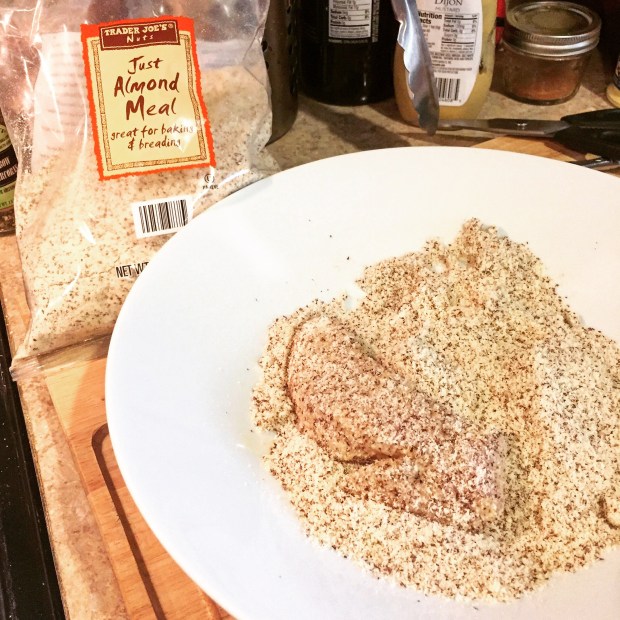
I feel that it is important to mention that there is also a product known as almond meal which is made from almonds that still have their skin and is not as finely ground. I mention this because many of the sources I gathered my almond info from suggested that the skin of the almond contains many of its beneficial antioxidants (source). However, the terms “flour” and “meal” are often used interchangeably. A tell-tale sign that you’re buying almond meal is the tiny pieces of brown skin in the mixture (see below).

Menu pic 6-15

Whether you use almond meal or flour, the point is you are using a product that will have less of a damaging effect on your body than regular wheat flour. Both Shannon and I have a preferred use of both products: Shannon loves using blanched almond flour to make paleo “friendly” almond cookies, while I like using almond meal to coat baked chicken or fish.

If you haven’t tried almond flour or meal yet, give it a shot. Its mild flavor won’t overwhelm any dish you use it in. If this post inspired you to give it a try, we’d love to hear what you think of it. If you are already an almond flour user & lover, please feel free to send your favorite recipe our way. You can email them to elementaltampa@gmail.com or post them to our social media pages (FacebookInstagram or Twitter). I also encourage everyone to check out our friend Anna’s book Eat Happy for more healthy recipes.

Addicted to Fitness Show Notes – How being a new dad affects your fitness

This week’s Addicted to Fitness is an on location, interview and throwback episode all in one. I return to the conception site of the podcast, which is also the home of Tyler, my former cohost. Tyler reached out a few weeks ago with a concept for a podcast that related to his new found vocation, fatherhood. He wanted to discuss life after having a kid and how it impacts willpower in terms of nutrition and workout out. Being that I’m about to become a dad, and we’re less than a week away from Father’s Day, I thought this would be a great topic for us to explore on the podcast.

Before we get into the dad centric discussion, I had to recap my week of training with Tyler. I’ve really been putting a lot of effort into doing more hypertrophy (fancy word to build muscle) training in between clients at Tampa Strength. I’d like to think with these workouts and the addition of 500-1000 quality calories a day, I could add 5 lbs of muscle in 8-12 weeks. Tyler got a real kick out of hearing this and quickly accused me of “BULKING BRO!” I’m only a few weeks into the process, but have still yet to see any significant muscle gain and the workouts are starting to take their toll. I’ll keep you updated on my progress as time goes on.

After discussing my workouts, we move the conversation to how Tyler’s new baby boy has affected his fitness. A lack of sleep and free time has drastically reduced Tyler’s ability and desire to workout. However, he is a big fan of Dr. Eric Goodman’s Foundation Training (workout example above) which incorporates a lot of isometric exercises that help participants increase mobility and alleviate common ailments like lower back pain. Tyler mentions how helpful these workouts have been to improving his posture and they take less than 15 minutes a day, which is perfect for a new dad. Unfortunately, Tyler has yet to find a solution to the obstacles fatherhood has created in regards to his nutrition.

Tyler works full-time and when he comes home, he looks forward to spending as much time as possible with his son and wife. This leaves very little time for meal prep and/or cooking, which has resulted in Tyler eating more “ready to eat” foods. He realizes that eating more processed foods can have a negative impact on his fitness, but believes that spending time with his infant son is paramount. I agree and anticipate I’ll be faced with the same predicament in a few months.

Podcast pic 6-12

Tyler and I go off on a couple other topics, some fitness related, some not, in this episode. I found it extremely beneficial not only because I’m about to be a dad, but because it allowed me to reiterate the idea that everyone’s fitness is different. Physical limitations, circumstances at home and access to resources can all affect how fit a person can be. It’s important to remember that you need to set a level of fitness that is customized to you, not to the bodybuilder you see on Instagram or the crossfit athlete you see on ESPN. It’s great to use those individuals as motivation, but don’t let them set your level of fitness.

I truly hope that this podcast is a resource you can use to help determine where your level of fit should be. We really want to provide useful health information that allows you to enhance your quality of life by improving your fitness. We’d love to hear your opinion on whether or not we’re achieving that goal or not. Send your feedback to elementaltampa@gmail.com or reach out to us on social media (FacebookInstagram or Twitter). Your comments and support continues to help us grow and we are extremely grateful. Keep rating, reviewing and sharing the podcast!

Links to this week’s episode

iTunes: https://itunes.apple.com/us/podcast/how-being-a-new-dad-affects-your-fitness/id1121420986?i=1000386428965&mt=2

Android: http://subscribeonandroid.com/addictedtofitness.libsyn.com/rss

Website: http://addictedtofitness.libsyn.com/how-being-a-new-dad-affects-your-fitness-0


What’s on the Menu – The epitome of finger licking good

You all know that I hold nutrition in higher regard than taste. I don’t mind choking something down if I know it’s good for me. Sardines, raw garlic or ground turmeric in my veggie & fruit smoothie are just a few examples. I will literally punish my taste buds if I believe what I’m eating will benefit me in some capacity. I assume that certain people think that today’s menu spotlight may be one of those “less than appetizing” foods, but I can assure you that it’s not.

I believe it’s safe for me to assume that you know the main ingredient of chicken liver pate is chicken liver. I can’t attest to the flavor of chicken liver by itself, but I know that when’s its used in pate, it’s delicious. If you take a look at the recipe from the New York Times (link) cooking section it’s not hard to imagine why I’m such a fan

  1. Melt butter in pan
  2. Soften onions
  3. Add chicken livers to pan; cook till brown on the outside
  4. Add contents of pan + spices to food processor
  5. Puree till smooth
  6. Store in fridge for few hours till set

Menu pic 6-7

Sounds great right? Well I can testify that it is, and the fact that the main ingredient is chicken liver makes it both delicious and nutritious. Three ounces of chicken liver contains 21 grams of protein, 5 grams of fat and significant amounts of important vitamins and nutrients. The same serving size contains 280% of our daily value (DV) of vitamin A & B12. It also contains 160% and 40% of our DVs for folate and iron respectively, both of which are extremely important to fetal development (source). We’ll discuss if expectant mothers should eat chicken liver a little later on in this post.

It’s clear that chicken liver is nutitrious, but what about chicken liver pate? According to the MyFitnessPal website, 2 ounces of my preferred store bought chicken liver pate (pictured below) contains 19 grams of fat (6 grams saturated) and only 5 grams of protein.

It’s a downright switch-a-roo of the macros compared to chicken liver by itself. The pate also contains 30% DV of vitamin A and 10% DV of iron (source). Plenty of fat, which you know I’m a fan of, but a little lacking in the protein department. Still a nutritious snack, in my opinion, but I’d definitely be better off just eating liver. Another aspect I need to factor in for the pate is source of the liver.

pexels-photo-197058

As we’ve discussed in previous menu spotlights, where and how an animal was raised affects its nutrition. My Trader Joe’s chicken liver pate was produced in the U.S. and inspected by the Dept of Agriculture, but it is very possible that it didn’t live the most optimal life. Now that I know how easy pate is to make, I should acquire chicken livers from my local farmers and just make my own. Stay tuned for that future post!

Before we wrap up today’s post I just want to address two issues. First, I’m happy to inform you that livers are NOT a storage facility for “toxins.” The liver’s job is to send the toxins to the systems responsible for expelling them or storing them. Also, certain studies suggest that pregnant women can eat liver without worry of vitamin A toxicity affecting their fetus (source). ONCE AGAIN, I’m not a doctor, just a reporter of data. If you are pregnant, I’d consult a health professional before eating liver.

I may not be a doctor, but I am a lover a feedback. Which is why you should feel free to send any feedback, liver related or not, to elementaltampa@gmail.com. We love pics, recipes and even videos of you doing something fitness related. Don’t forget to connect with us on social media (Facebook, Instagram or Twitter). We’d love to know if you’ve tasted the yummy goodness of chicken liver pate.


What’s on the Menu – We may be getting a bit nutty

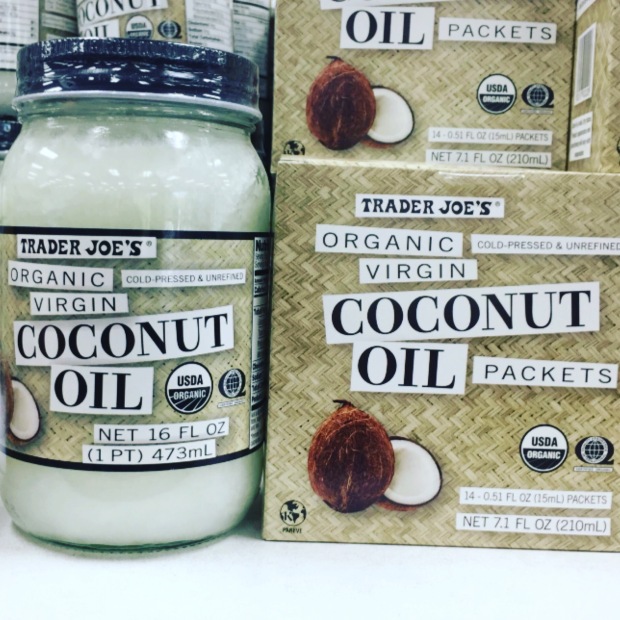
I believe the first time I heard about the benefits of coconut oil was when I heard Dave Asprey (creator of Bulletproof coffee) talk about it on Joe Rogan’s podcast back in 2012. Asprey described how his bulletproof coffee, which contained an ingredient prominent in coconut oil, helped him lose weight, have more energy and be sharper mentally. Even though I wasn’t quite prepared to start downing his bulletproof coffee, I began hearing more and more individuals I consider experts in nutrition and/or medicine talk about the benefits of coconut oil.  People like Vinnie Tortorich, Dr. Rhonda Patrick and Mark Sisson were signing its praises, which in my mind gave me the greenlight to start incorporating it into my diet anyway possible.

I know I’ve talked about my love for coconut oil many times on this blog. Heck, I think Shannon and I have done at least two Addicted to Fitness episodes where we taste tested a coffee + coconut oil concoction (click here to listen). However, I recently learned that my LDL cholesterol is extremely high. I believe the primary culprit for this is my genes, but I’m also analyzing items in my diet that may drive up “bad” cholesterol. Which is why I’m gonna take a closer look at a few of the pros & cons associated with coconut oil consumption.

Pros

  • Contains medium chain triglycerides (MCTs) which unlike long chain triglycerides can be easily accessed by the body as an energy source and are less likely to be stored as fat (source)
  • Contains high concentrations of lauric acid, which has been shown to aid in the treatment of viral, bacterial and fungal infections (source)
  • The consumption of MCTs may increase “good” HDL cholesterol (source)
  • The consumption of MCTs has also been linked to improved cognitive function in Alzheimer’s patients (source)

Cons

  • Coconut oil is ~50% lauric acid which some researchers believe acts as a long chain triglyceride, which could raise “bad” LDL cholesterol (source)
  • Coconut oil only contains 10-15% MCTs (if you subtract lauric acid), which greatly reduces its ability to boost metabolism (source)
  • Certain commercially sold coconut oils can be highly refined & processed which greatly reduces its health benefits (source)

Menu pic 6-2

My preliminary research leads me to believe that there is much more upside to using unrefined, virgin coconut oil than downside. However, for someone like myself, who is genetic predisposed to have high LDL cholesterol, it may be wise to use it sparingly. Although, I’ve recently learned that not all LDL cholesterol is “bad” and I plan on getting more blood tests done to determine the makeup of my levels. Until then, I’ll limit my coconut oil use to cooking, instead of throwing it into smoothies & my morning coffee.

Just because I’m cutting down on my coconut oil use, it doesn’t mean I don’t want to hear how you use it. Whether it’s for cooking, skin care or cold remedy, please feel free to send your coconut oil uses to elementaltampa@gmail.com. We’d also really enjoy it if you send us a pic on our various social channels (Facebook, Instagram or Twitter).

What’s on the Menu – The one soft drink that doesn’t make me sick to my stomach

Yes. There is an actual difference between ginger ale and ginger beer, at least in theory. Traditional ginger beers, use fermentation to create the carbonation & usually yield a stronger ginger flavor. Ginger beer can contain alcohol, but most available nowadays do not. Ginger ale on the other hand is sweetened soda water with added ginger flavor (source). Even though I believe soft drinks can cause serious health problems, these two ginger sodas do offer moderate health benefits, but it’s certainly not because of their sugar content.

There is a reason why they offer you a ginger ale on the plane if you’re feeling nauseous. Studies performed in the last 10 years suggest that ginger can not only help with your run of the mill upset stomach, but it can also alleviate the nausea associated with sea sickness, chemotherapy and pregnancy. It’s important to know that they did not use ginger ale in these research studies. They actually determined that 1-1.5 g of ginger (raw or powdered) could alleviate symptoms associated with these various types of nausea (source). The medicinal effects of ginger don’t stop there.

pexels-photo-128403

Ginger also contains a powerful anti-inflammatory compound known as gingerol (clever name).  This compound has been linked to the reduction of certain side effects of chronic health conditions like osteoarthritis, type 2 diabetes and cancer. In fact, several recent studies have determined that gingerols “may be effective chemopreventive and/or chemotherapeutic agents” in the treatment of colorectal and ovarian cancers (source). The relief of day-to-day muscle pain provided by gingerol is another beneficial aspect.

In 2010, a small study conducted at the University of Georgia suggested that regular ginger supplementation could reduce exercise-induced muscle pain (source). As someone who essentially lives at the gym, this quality alone makes throwing a couple hunks of ginger in my smoothie or afternoon tea worth the spicy kick.

Menu pic 5-25

Much like garlic, I’ve eaten whole hunks of ginger root. However, the intense flavor can be a little much. Which is why I love cooking with it instead of swallowing it whole. I’m a big fan of sauteing up minced ginger in a pan before I toss in vegetables and shrimp for a delicious stir fry. I know it’s a big component of Asian cooking, but I’ve found that it can provide a whole new flavor to a variety of dishes.

I’d love to hear your preferred method of consuming ginger. As long as the recipe doesn’t contain the words “Canada Dry” feel free to send them to elementaltampa@gmail.com or just tweet us a picture the next time you cook with it. Our Twitter and Instagram handle is @ettampa. Let’s connect!

What’s on the Menu – I can see clearly now

None of us are getting any younger. I know that’s not exactly breaking news, but I recently reached the point in my life where I’m beginning to feel the effects of aging. I cruised through my 20s with little concern every time my birthday rolled around. Now, as I inch closer to 34, I’m starting to experience issues that would have never affected me 5 years ago.

My muscles take a little longer to recover from a tough workout. It’s hard for me to be energetic the day after a poor night’s sleep and if I decide to forgo “clean eating” for a night, my digestive system is in turmoil for at least 24 hours. Fortunately, there is one bodily function that has yet to be touched by the hands of father time and I believe that has a lot to do with today’s menu spotlight.

Salad

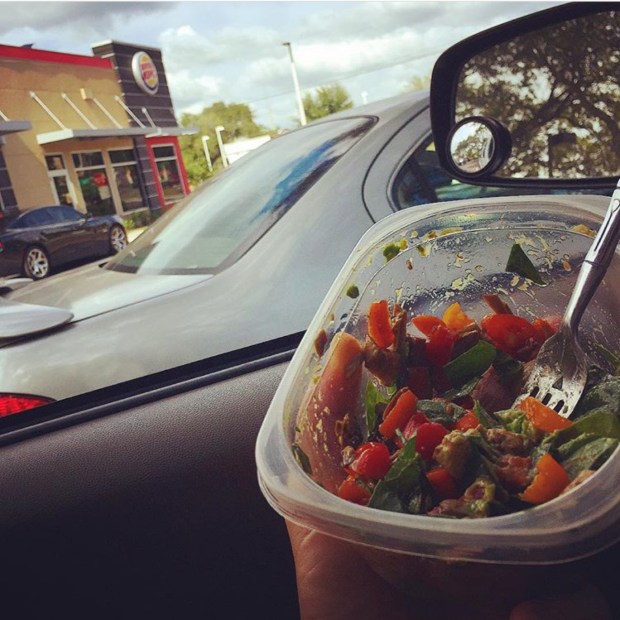
Whether it be in a salad I packed for lunch or Shannon’s delicious Saucy Tomato Eggs (clink link for recipe), bell peppers frequently make their way into many of our meals. Unlike their spicy cousins, bell peppers do not contain capsaicin, which is why they’re often referred to as sweet peppers. True to their name, bell peppers provide a sweet flavor and a tremendous crunch to any recipe. Even though they lack the beneficial capsaicin compound, bell peppers provide a host of beneficial nutrients that can help manage several different health conditions, including poor eye sight.

One medium sized red bell pepper contains approximately 75% of our recommended daily value of vitamin A. Research has shown that the vitamin A contained in vegetables like bell peppers not only protects the surface of the eye, but also decreases the inflammation created by specific eye conditions (source). In addition to vitamin A, bell peppers also contain high levels of the antioxidants lutein and zeaxanthin, which have been shown to be effective in the treatment of age-related vision loss (source). Believe it or not, the bell pepper’s health benefits don’t stop there.

Menu pic 5-18

Bell peppers also contain a significant amount of vitamin C, vitamin B6, folate and numerous antioxidants. This nutrient dense fruit/veggie improves immunity, reduces inflammation, promotes healthy pregnancies and stimulates collagen production. It’s important to remember that a lot of the vitamins bell peppers possess are fat soluble vitamins. Which means you need to prepare them with a fat source. Sauteing them up in olive oil or butter should do the trick (source).

I know I included the link already, but do yourself a favor and check out Shannon’s saucy tomato eggs recipe. If I had to pick only one meal that contained bell peppers to eat for the rest of my life, it would be that one.

No doubt about it.

If you have a recipe that features bell peppers that you can’t live without, please let me know about it. You can email your recipes to elementaltampa@gmail.com or post a pic of your favorite bell pepper recipe on one of our various social media channels. It’s going to be hard to beat Shannon’s recipe, but you can try.